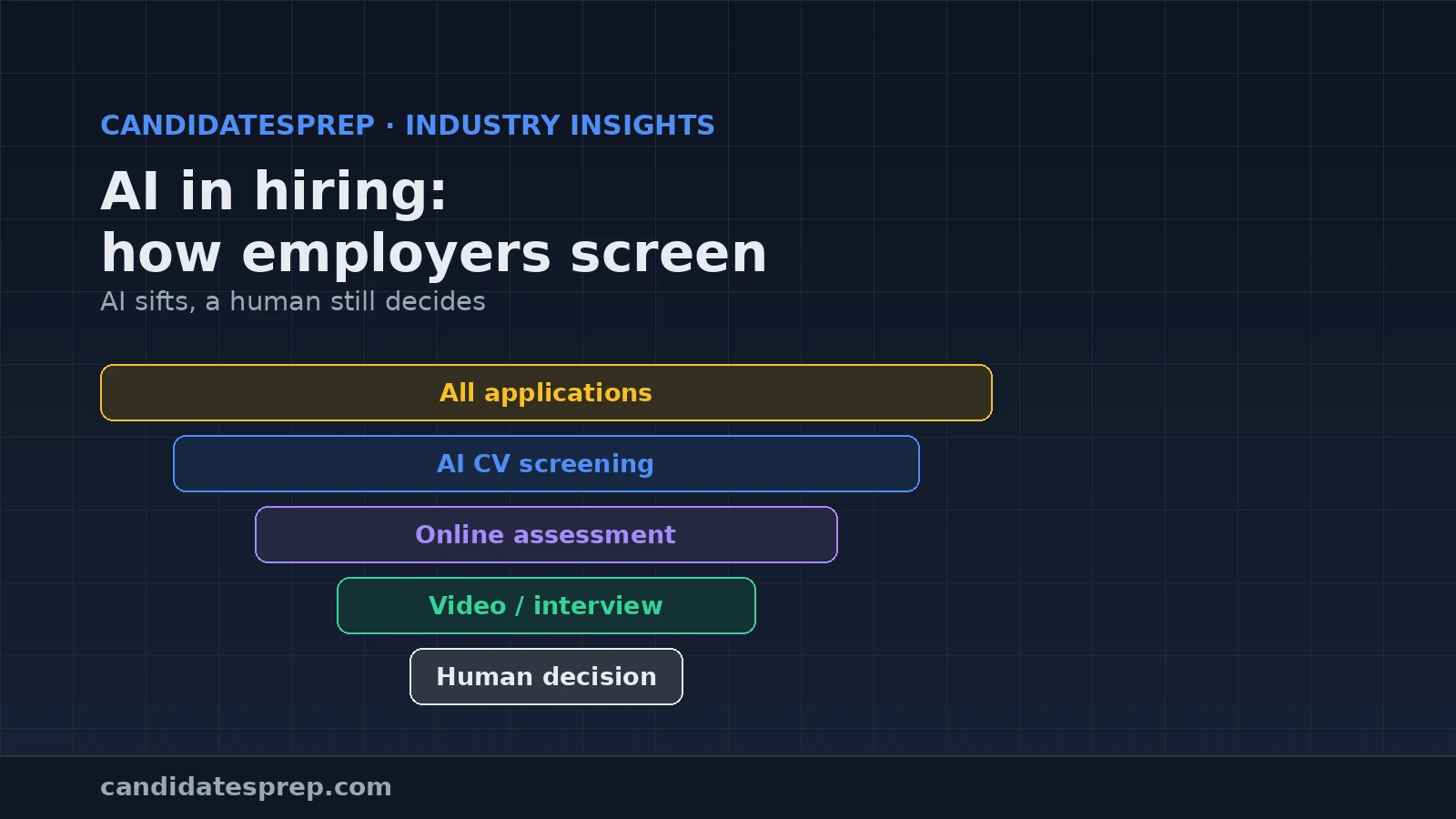
AI is now common in hiring, most often to sift large volumes of applications, run or mark assessments, and support interview scheduling and review, though a human still makes the final call at most employers. Knowing where AI sits in the process helps you prepare for it rather than be caught out. Here is an honest map of how modern screening works and what you can do about it.
Where AI enters the process
For roles that attract many applicants, employers increasingly use software to help manage the flood. That can mean parsing CVs, ranking or filtering applications against the role, administering skills or aptitude tests, and organising interviews. The aim is usually to handle volume, not to remove people from the decision. At most responsible employers, a human reviews shortlisted candidates before anything is decided.
CV and application screening
Applicant tracking systems have sorted and searched applications for years, and newer tools add more automated ranking. The practical lesson is old and reliable: make your application clear, relevant and easy to parse. Match your experience to the language of the job description, lead with concrete achievements, and avoid burying key skills in graphics or unusual formatting that software may not read well.
Online assessments and proctoring
Many employers now use online skills tests as an early filter, and some are automatically marked. If the role matters to you, prepare for these as you would any exam: understand the format, practise under time pressure, and treat them as a real gate rather than a formality. Where assessments are remotely proctored, the integrity rules are strict, and our guide to what online proctoring flags explains what to expect.
Video and interview tools
Some processes include recorded video interviews or AI-assisted review. Treat a recorded interview like a live one: test your setup, look at the camera, answer in clear structured points, and do not assume informality just because no one is on the other end in real time. Preparation reads well on camera, and nerves read worse.
Fairness, and your rights
AI screening has real risks around bias and transparency, and regulation is developing to address them. In some places you may have rights to information about automated decisions, or to request human review. If you believe a process treated you unfairly, it is reasonable to ask the employer how AI was used and whether a person reviewed your application. Being informed is part of preparing well.
How to give yourself the best chance
- Tailor each application to the specific role rather than sending a generic one.
- Keep formatting clean and machine-readable, with skills stated plainly.
- Prepare properly for any test or assessment, under realistic conditions.
- Build genuine, provable skills, since certifications and portfolios still carry weight with the humans who make the final decision.
The bottom line
AI mostly changes how early screening happens, not whether your skills matter. Make your application clear and relevant, prepare seriously for online assessments, and keep building credentials you can prove. Do that, and you are ready for a process with AI in it, not thrown by it.
Facing an online assessment? Rehearse under exam conditions on the CandidatesPrep simulator, or book a demo to prepare a team for certification.