For Trainers
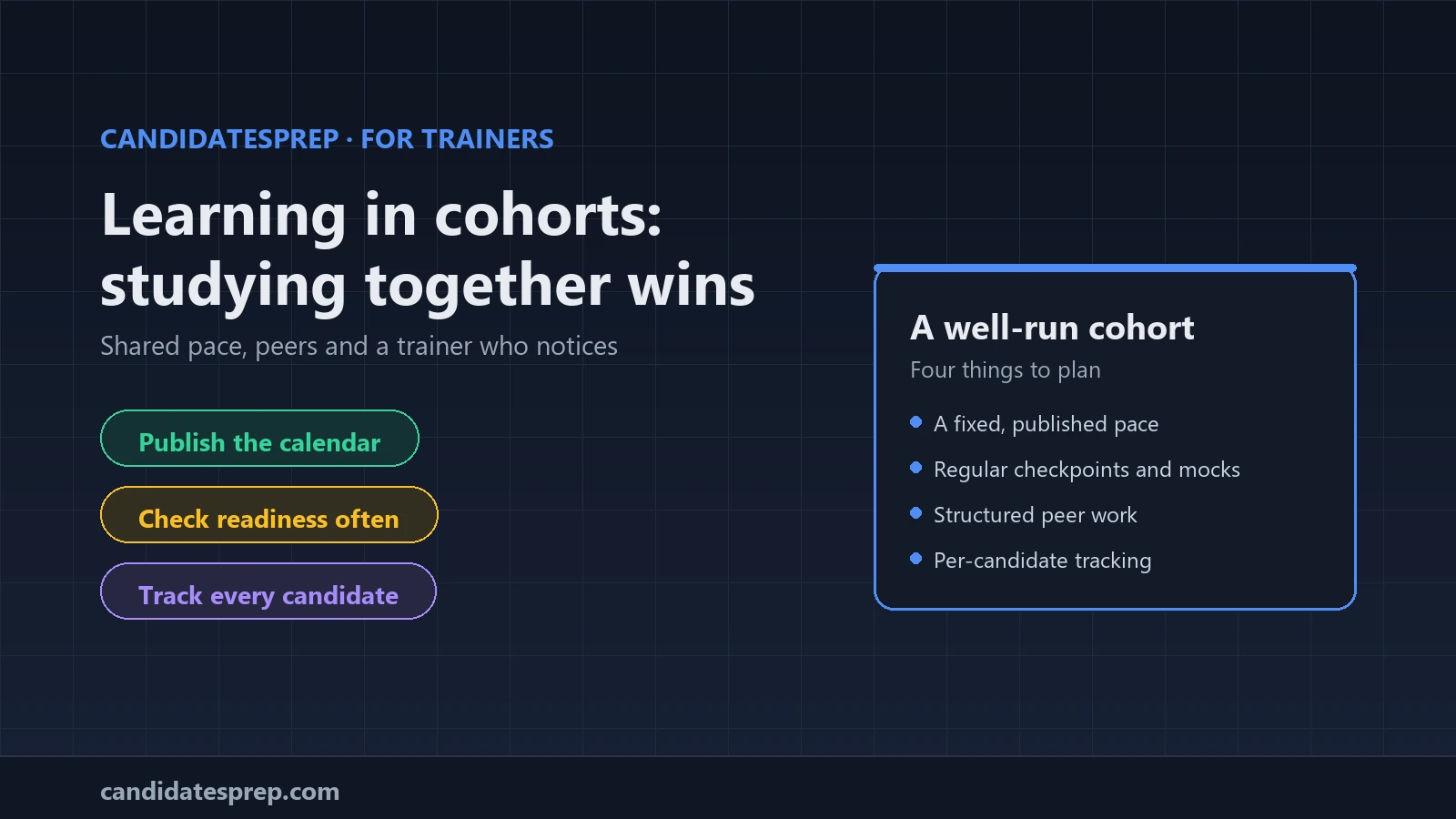
Learning in Cohorts: Why Studying Together Wins
Cohorts give learners a shared pace, checkpoints, peers and a trainer who notices. Here is why studying together works and how to run a cohort well.
Running an exam or training business: enrolment, delivery, and pricing.
Cohorts give learners a shared pace, checkpoints, peers and a trainer who notices. Here is why studying together works and how to run a cohort well.
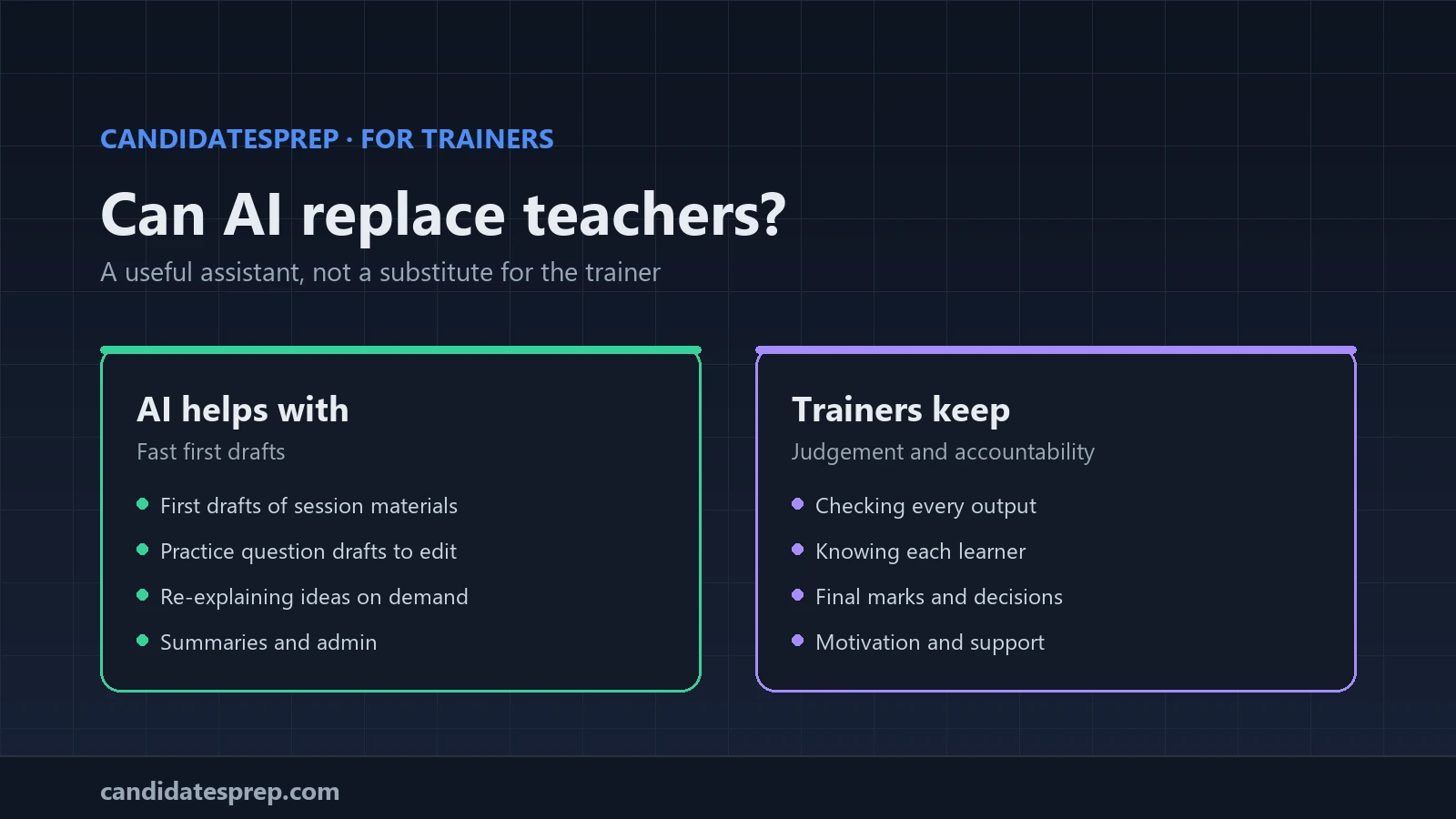
AI can draft materials, practice questions and quick feedback, but not a trainer's judgement or accountability. Here is how to use it responsibly.
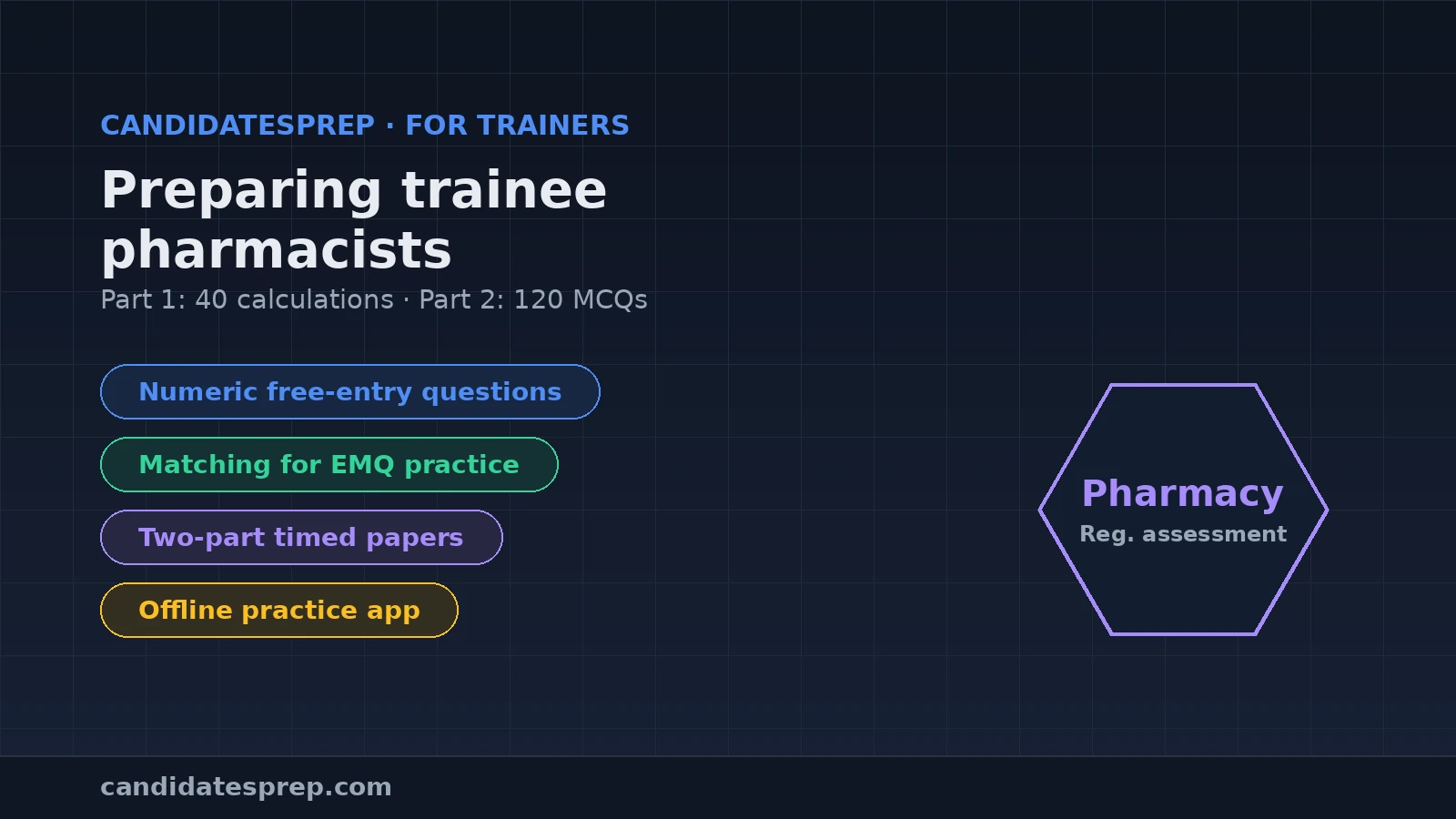
The UK Common Registration Assessment pairs a calculations paper with 120 multiple-choice questions. Here is how pharmacy educators can use an LMS to prepare trainees.
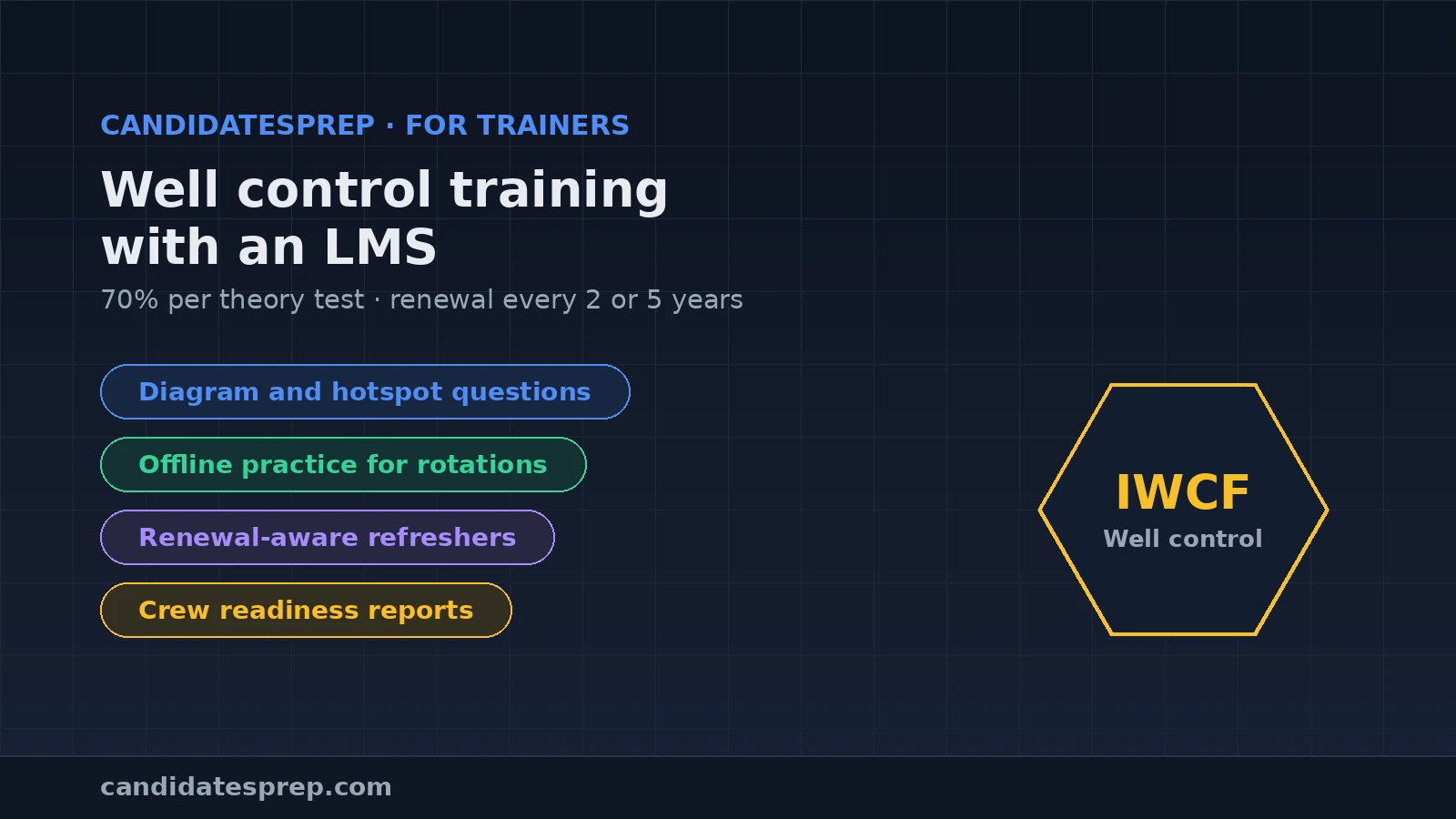
IWCF well control certification combines multiple-choice theory tests, simulator assessments and regular renewal. Here is how drilling trainers and operators can use an LMS.
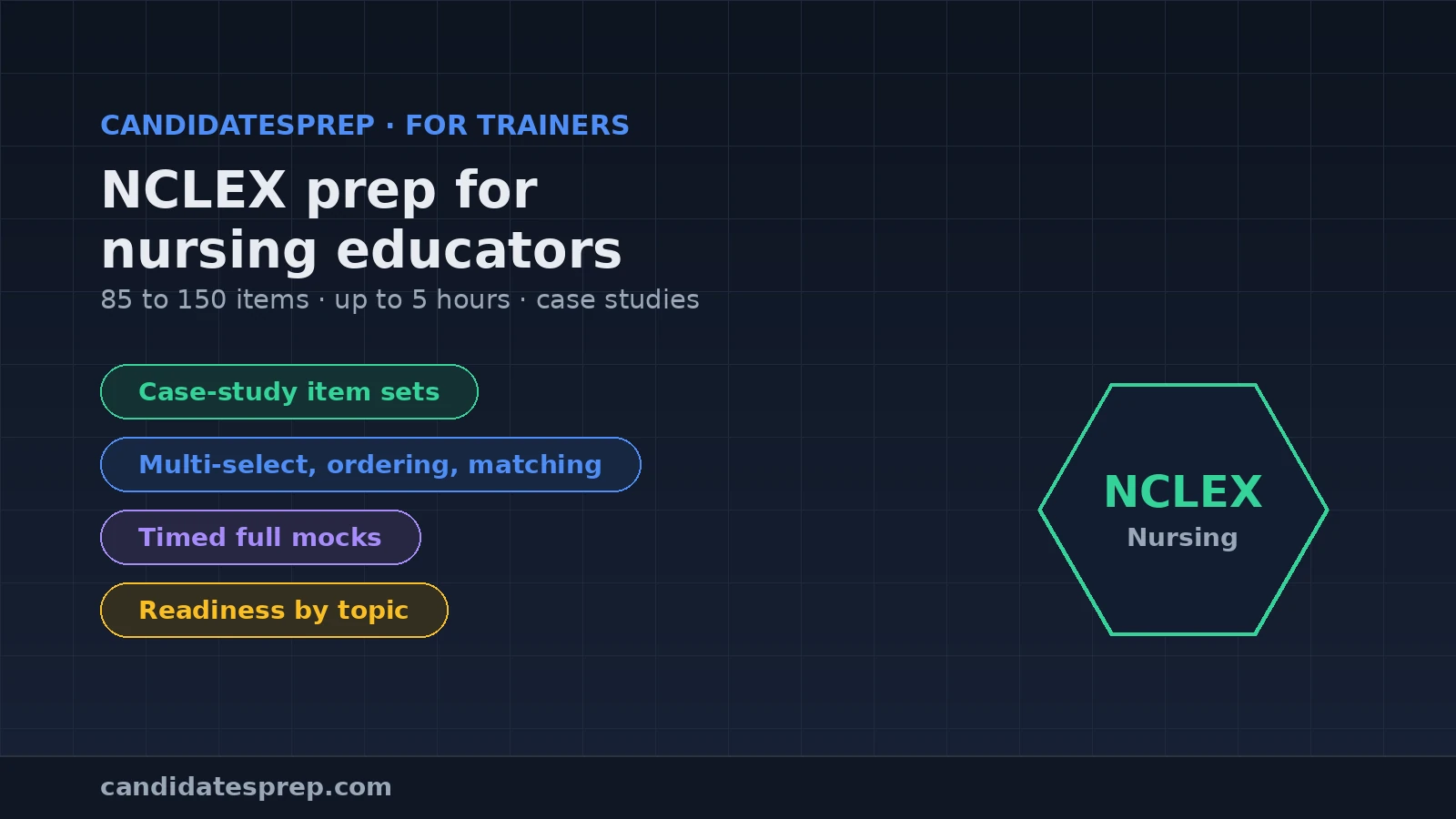
The NCLEX-RN is adaptive, built around clinical judgement case studies, and can last up to five hours. Here is how nursing educators can use an LMS to prepare students.
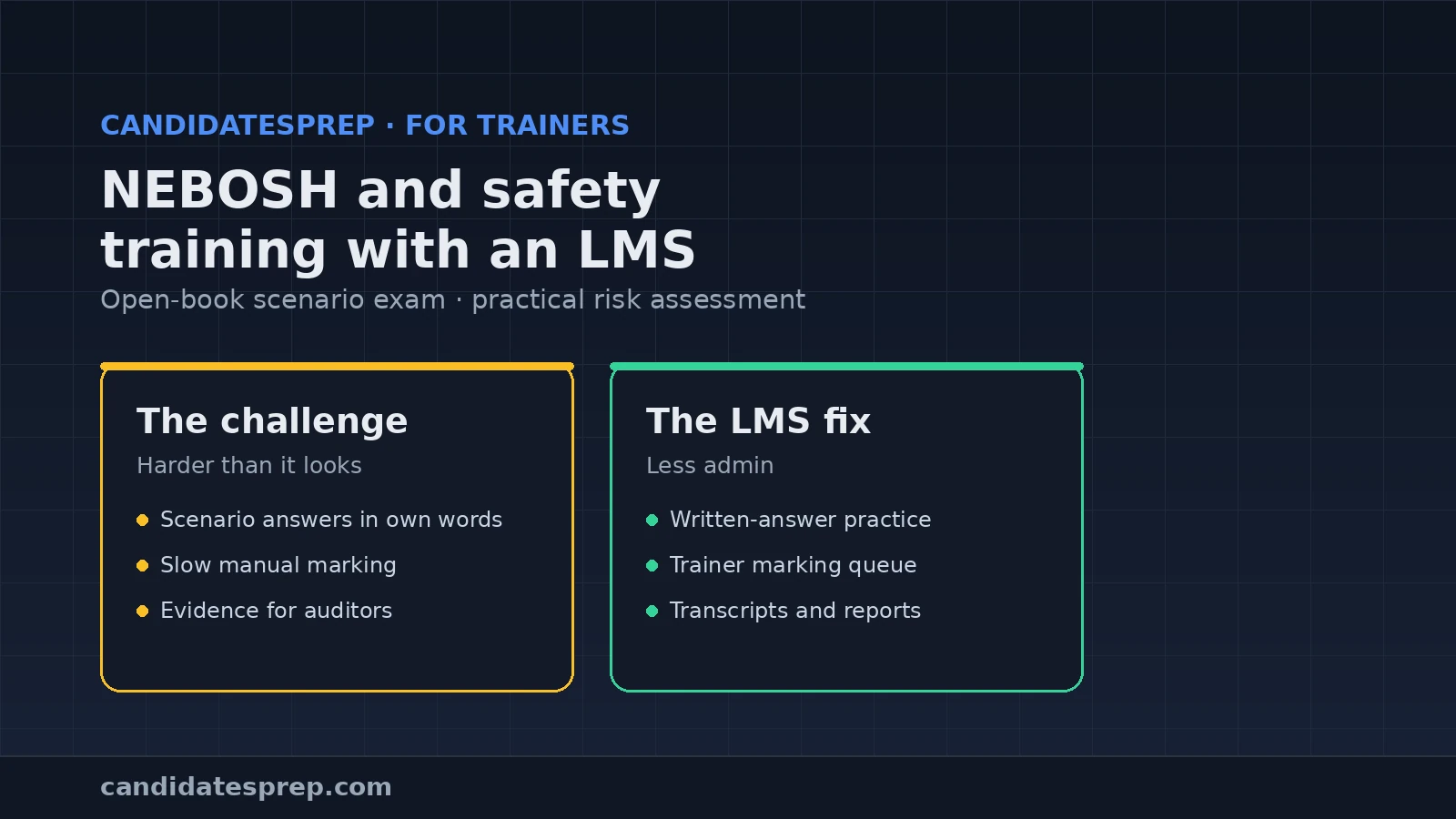
The NEBOSH International General Certificate is assessed by an open-book exam and a practical risk assessment. Here is how safety trainers can use an LMS to prepare learners.
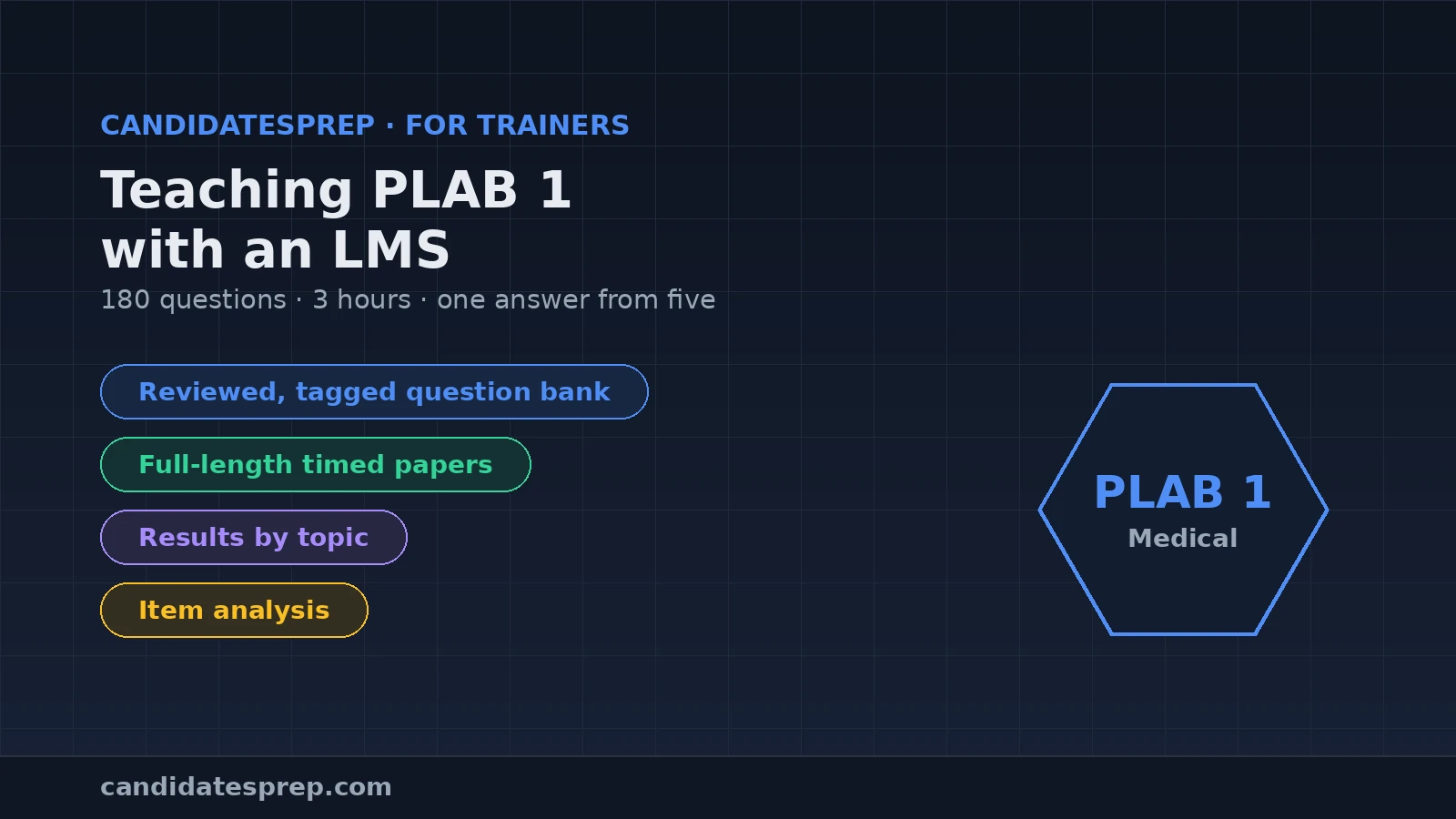
PLAB 1 tests applied clinical knowledge across 180 scenario-based questions in three hours. Here is how medical academies can use an LMS to teach it at scale.
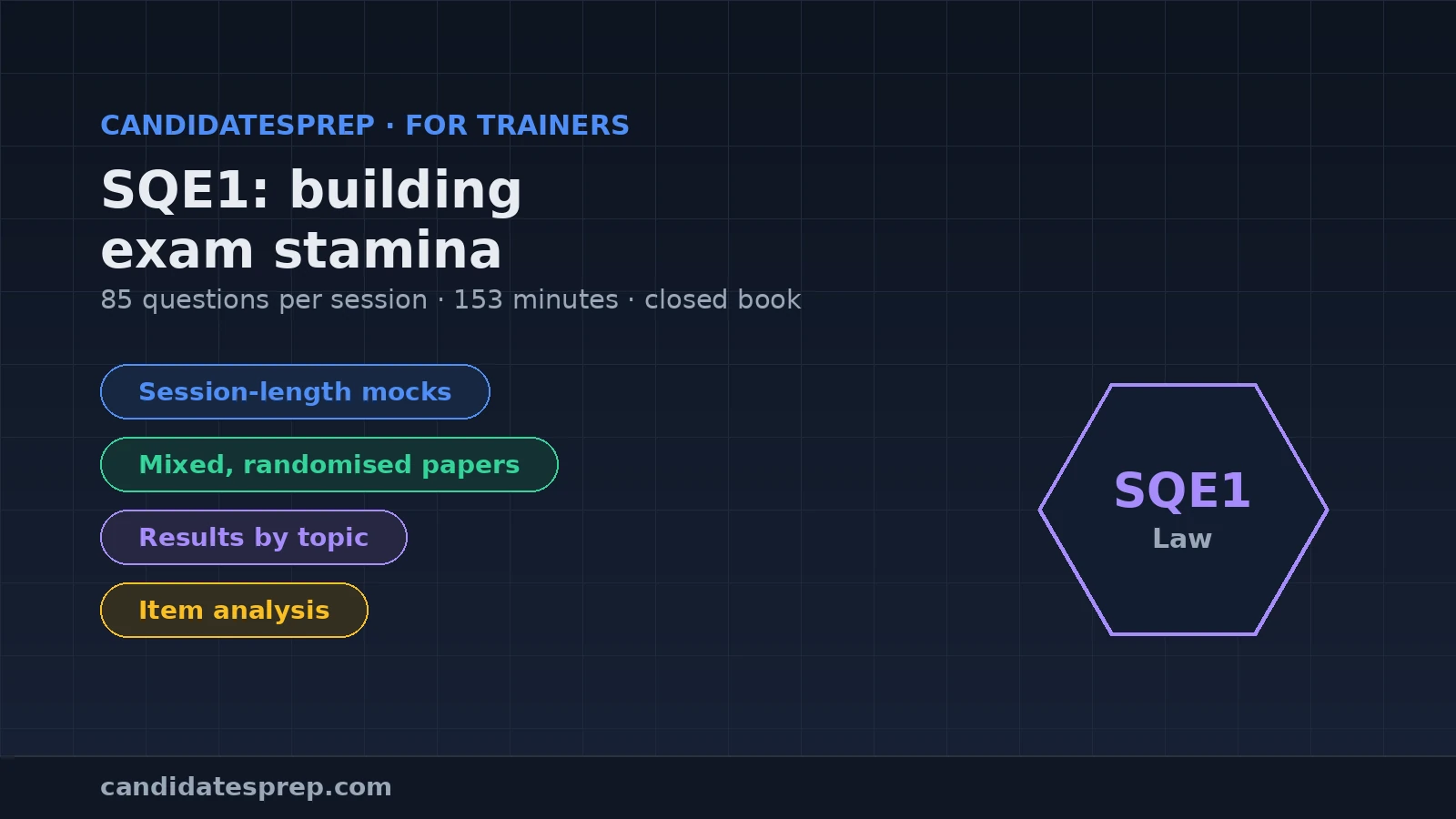
SQE1 means long, closed-book, computer-based sessions of single best answer questions across mixed subjects. Here is how law schools and prep providers can use an LMS.
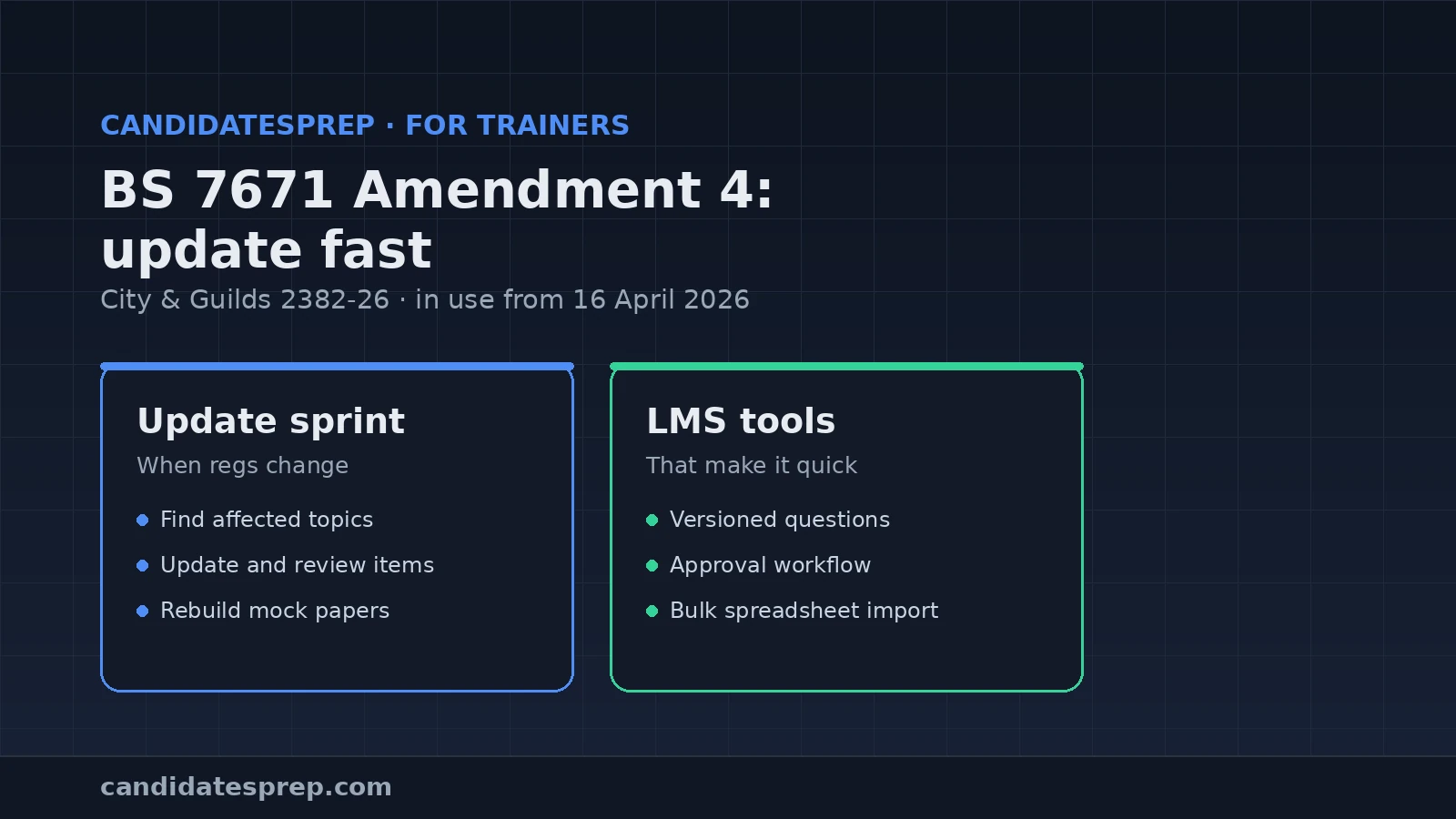
Amendment 4:2026 to BS 7671 brought a new City & Guilds 2382-26 qualification. Here is how electrical trainers can update courses and question banks quickly with an LMS.