Microsoft retired both AI-900 and AI-102 on 30 June 2026. Azure AI Fundamentals lives on through a new exam, AI-901, while the Azure AI Engineer Associate has been retired and replaced by a new credential earned through AI-103. If you were weighing AI-900 against AI-102, this is the choice you face now.
What changed on 30 June 2026
Microsoft launched a wave of AI-focused certifications in 2026 and retired several older ones to make room. Its Skills Hub announcement sets out the replacements:
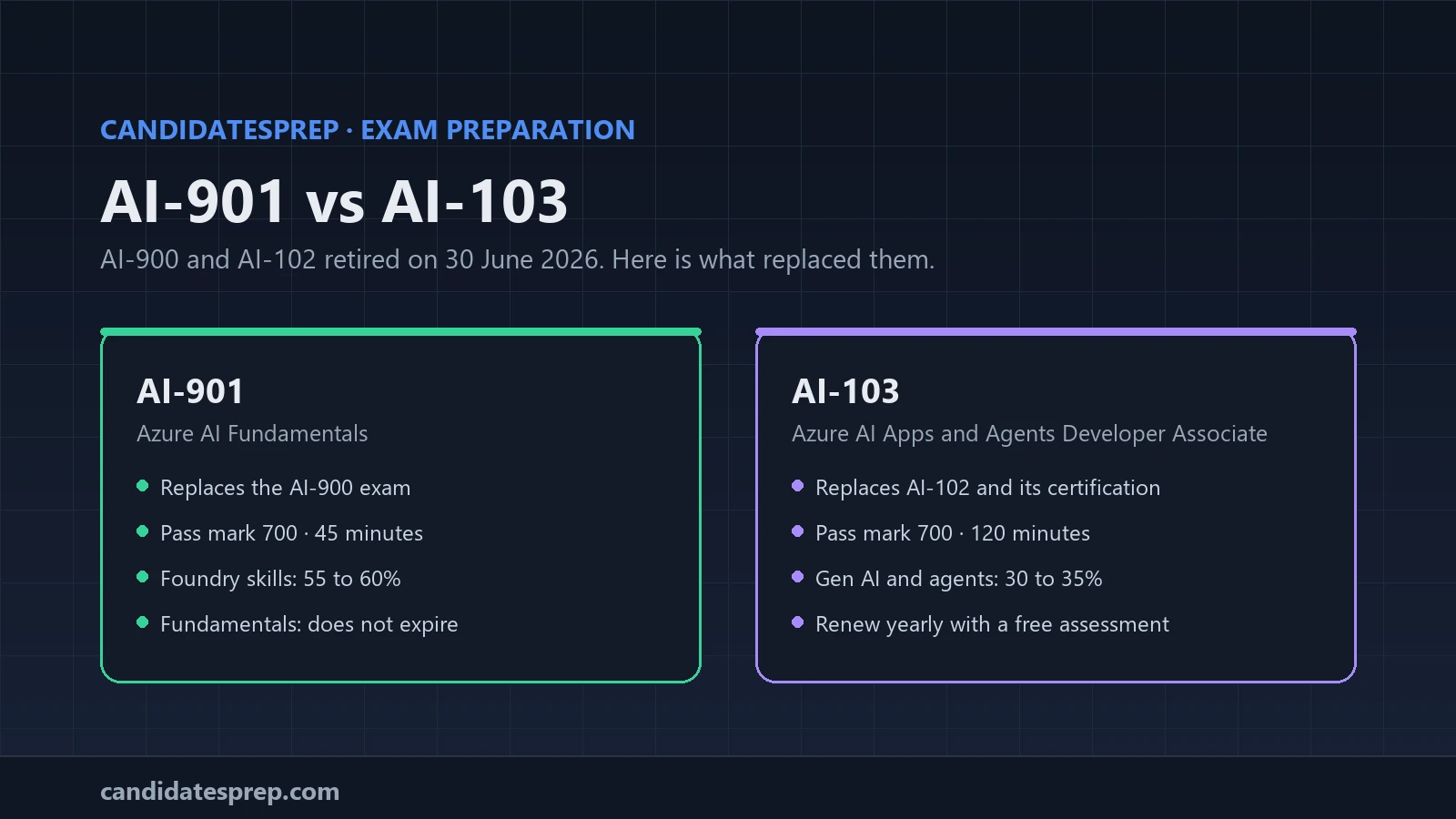
- Exam AI-900 retired on 30 June 2026. The Azure AI Fundamentals certification continues, but you now earn it by passing AI-901.
- Exam AI-102 and the Azure AI Engineer Associate certification retired on the same day. The replacement is a new certification, Azure AI Apps and Agents Developer Associate, earned through exam AI-103.
The same wave replaced AZ-204 with AI-200, which our guide to the AZ-204 retirement covers. So the old question, fundamentals or associate, still stands. The exam codes and the content have moved on.
AI-901: fundamentals with hands-on work
AI-901 keeps the Azure AI Fundamentals name, but it is a different exam from the one it replaced. AI-900 welcomed candidates from non-technical backgrounds. AI-901 expects knowledge of Python coding syntax and familiarity with Azure resources. It measures two skill areas:
- Identify AI concepts and capabilities (40 to 45%)
- Implement AI solutions by using Microsoft Foundry (55 to 60%)
The larger area covers writing prompts, deploying a model, building a simple chat client and a single agent, and lightweight apps for text, speech, vision and information extraction. You need a scaled score of 700 to pass. Microsoft lists 45 minutes for fundamentals exams, and fundamentals certifications do not expire, so there is nothing to renew.
AI-103: the new associate exam
AI-103, Developing AI Apps and Agents on Azure, is aimed at AI engineers who build, manage and deploy agents and AI solutions with Microsoft Foundry. Microsoft expects experience developing apps in Python. You have 120 minutes, the passing score is 700, and the skills measured are:
- Plan and manage an Azure AI solution (25 to 30%)
- Implement generative AI and agentic solutions (30 to 35%)
- Implement computer vision solutions (10 to 15%)
- Implement text analysis solutions (10 to 15%)
- Implement information extraction solutions (10 to 15%)
In AI-102's final outline, agentic work was only 5 to 10% of the exam. In AI-103, generative AI and agents form the largest single area. As a role-based exam, it also lets you open Microsoft Learn during the exam, though the clock keeps running; fundamentals exams do not. Associate certifications expire each year, and you renew free by passing an online assessment on Microsoft Learn.
Which one suits you?
Choose AI-901 if you are early in an AI career, moving into AI from another technical role, or want a structured first look at Microsoft Foundry. It is a sensible first step, although Microsoft's AI-103 page lists no prerequisite certification.
Choose AI-103 if you already write Python and build applications, and your job is to put generative AI and agents into production on Azure. Its weight on planning, monitoring, security and responsible AI reflects day-to-day engineering, not just definitions.
If you are not technical at all, neither exam is a natural fit any more, because AI-901 now asks for Python. Our guide to AI skills worth learning in 2026 is a better starting point, and the AWS AI Practitioner is a foundational exam that does not expect you to build AI solutions.
Already hold AI-900 or AI-102?
Microsoft says retirement does not revoke a certification you have already earned. If you passed AI-900, your Azure AI Fundamentals certification stays on your transcript and does not expire. If you hold the Azure AI Engineer Associate, it stays valid until its expiry date, but its renewal assessment has been retired, so you cannot extend it. To keep a current associate credential in this area, plan for AI-103.
Practise under real exam conditions
Both exams are timed and proctored, and AI-103 packs five skill areas into two hours, so rehearsing the format matters as much as reading. On CandidatesPrep you can sit timed mocks that mirror the real exam's timer, navigation and flagging, then see your results broken down by topic, so you know whether agents, vision or information extraction needs more work before you book.
Microsoft updates its outlines regularly, so check the AI-901 study guide and the AI-103 study guide for current details, and confirm the price for your country when you register.
The bottom line
AI-900 versus AI-102 is now AI-901 versus AI-103. Take AI-901 if you want a foundation and can read basic Python. Take AI-103 if you already build apps and want a credential for production AI work on Azure.
Prepare with a timed mock on the CandidatesPrep simulator, or book a demo to set up timed practice for a whole cohort.