On the morning of an exam, your job is not to learn anything new; it is to arrive calm, rested and on time, and to let the preparation you have already done do its work. Last-minute cramming tends to raise panic without raising your score. Here is a simple routine to steady exam-day nerves and walk in ready.
The night before sets up the morning
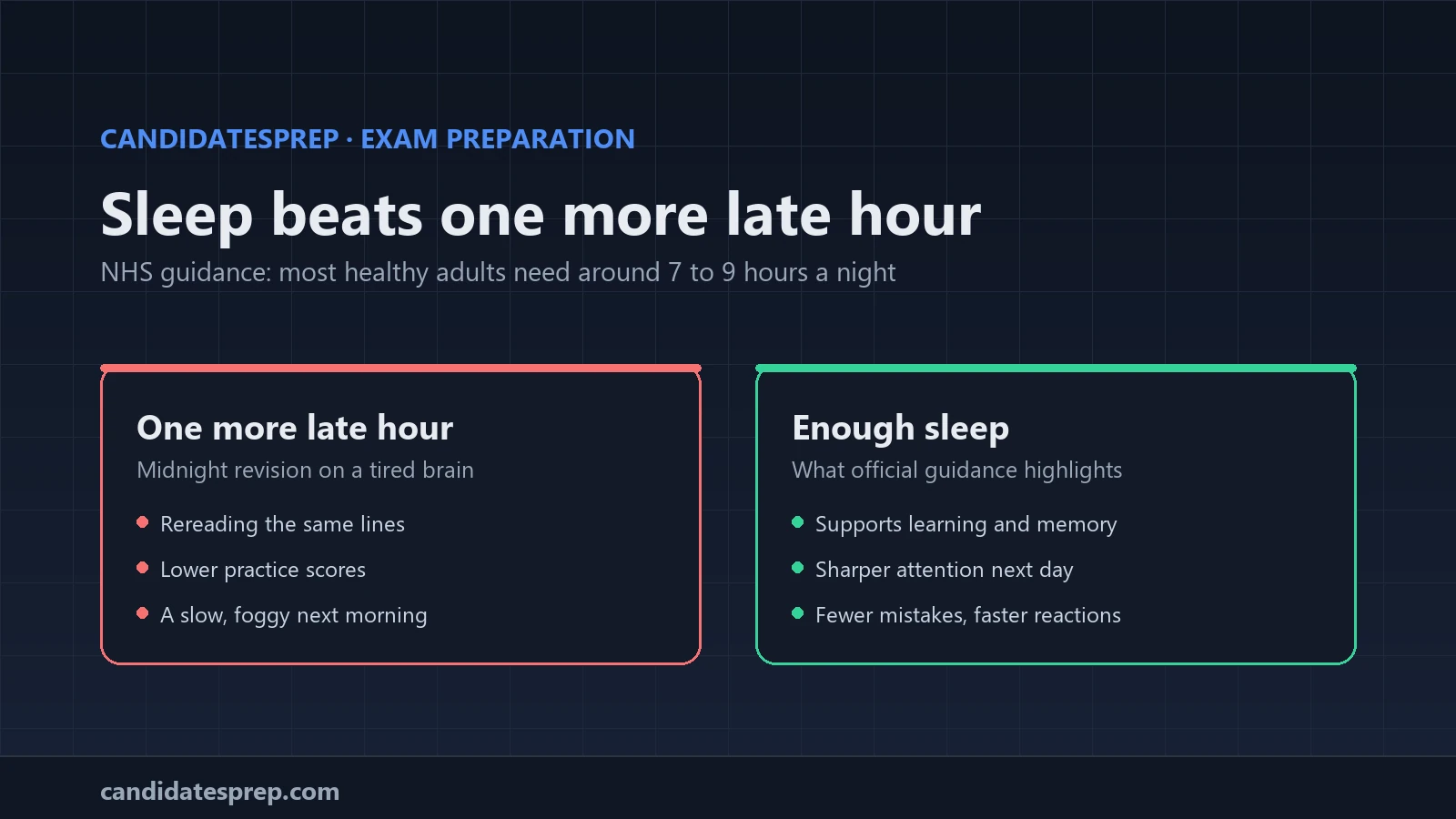
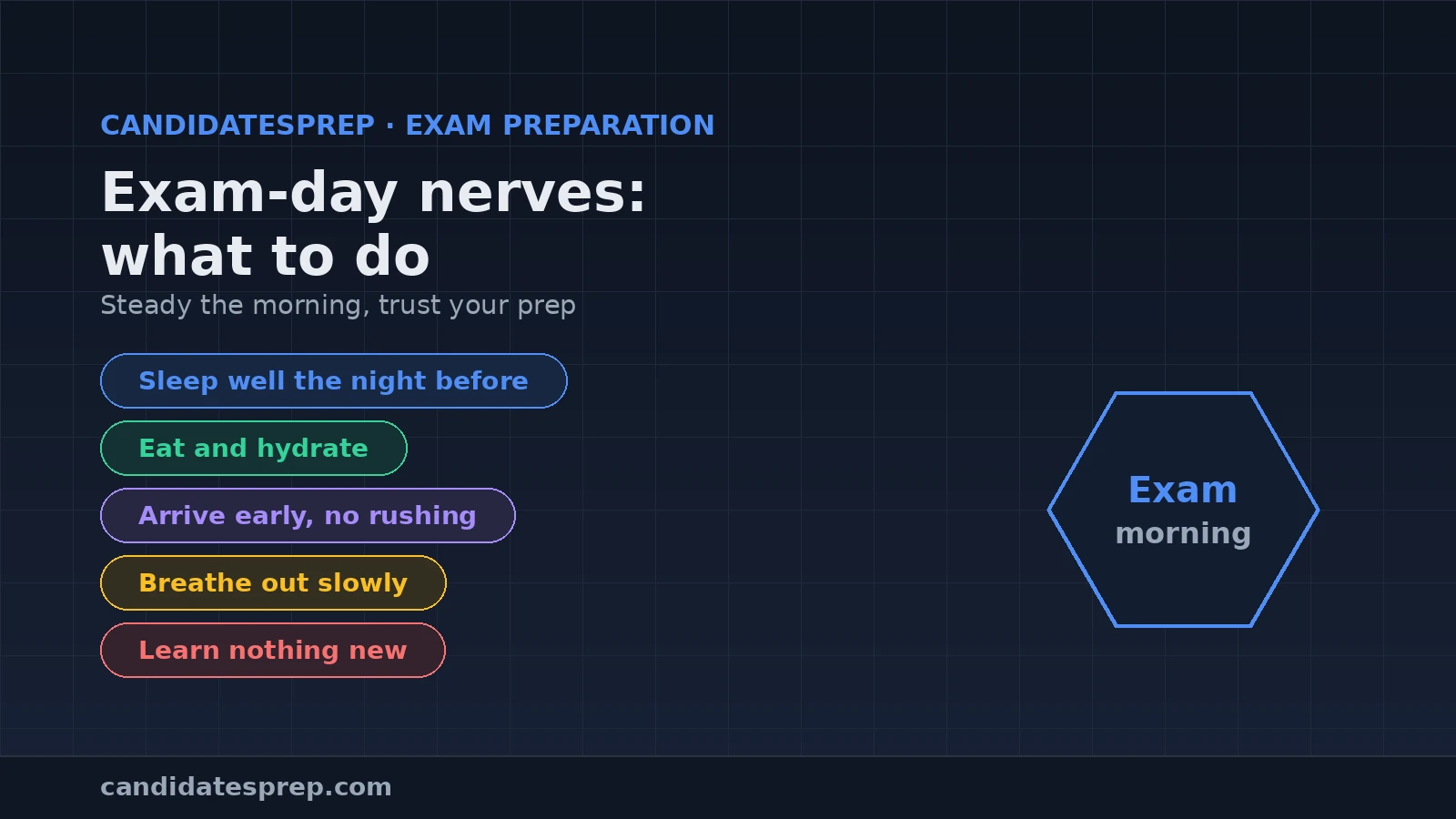
A good exam morning starts the evening before. Lay out everything you need, confirm the time and place, and get to bed at a sensible hour. Sleep does more for recall and clear thinking than a late cram session ever will, so protect it. Walking in rested is one of the most useful things you can do for your score.
Eat and hydrate
Have a normal, steady breakfast rather than skipping food or overloading on sugar and caffeine. A racing, jittery body makes an anxious mind worse. Drink some water. These sound almost too basic to mention, but a settled body genuinely helps a settled mind on a high-pressure morning.
Do not learn anything new
Resist the urge to open the textbook and find something you do not know; it only feeds panic. If you want to look at anything, glance over a short summary sheet of things you already know well, purely to warm up and build confidence. The morning is for steadying, not for last-minute learning.
Arrive early
Give yourself plenty of time to get there, with a buffer for delays. Rushing in late floods you with stress at exactly the wrong moment. Arriving early lets you settle, visit the toilet, and start from a calm baseline rather than a sprint. If the exam is online, test your setup and connection in good time instead.
Have a few calming techniques ready
- Slow your breathing: breathe out for longer than you breathe in for a few rounds to settle your body.
- Reframe the nerves: a faster heartbeat is your body getting ready, not a sign you will fail.
- Ground yourself: name a few things you can see and feel to bring your attention back to the present.
Our fuller guide to managing exam stress covers these in more depth.
In the first few minutes
Read the instructions slowly rather than rushing. Start with a question you can answer to build momentum and settle the nerves. If your mind goes blank, breathe, flag the question, and move on; the answer often returns once the pressure is off it. Calm compounds, and so does panic, so steer towards the first.
When nerves are more than nerves
If exam anxiety regularly overwhelms you or affects your daily life, that is worth taking seriously beyond one morning routine. Talk to your GP, a counsellor, or a trusted person, and check what support your school, university or employer offers. There is no prize for struggling alone.
The bottom line
Rest, eat, arrive early, keep a couple of calming techniques handy, and trust your preparation. The morning of the exam is about staying calm and letting the work you have already done carry you through.
The best cure for nerves is familiarity. Rehearse the real thing on the CandidatesPrep simulator, or book a demo to prepare a cohort with confidence.