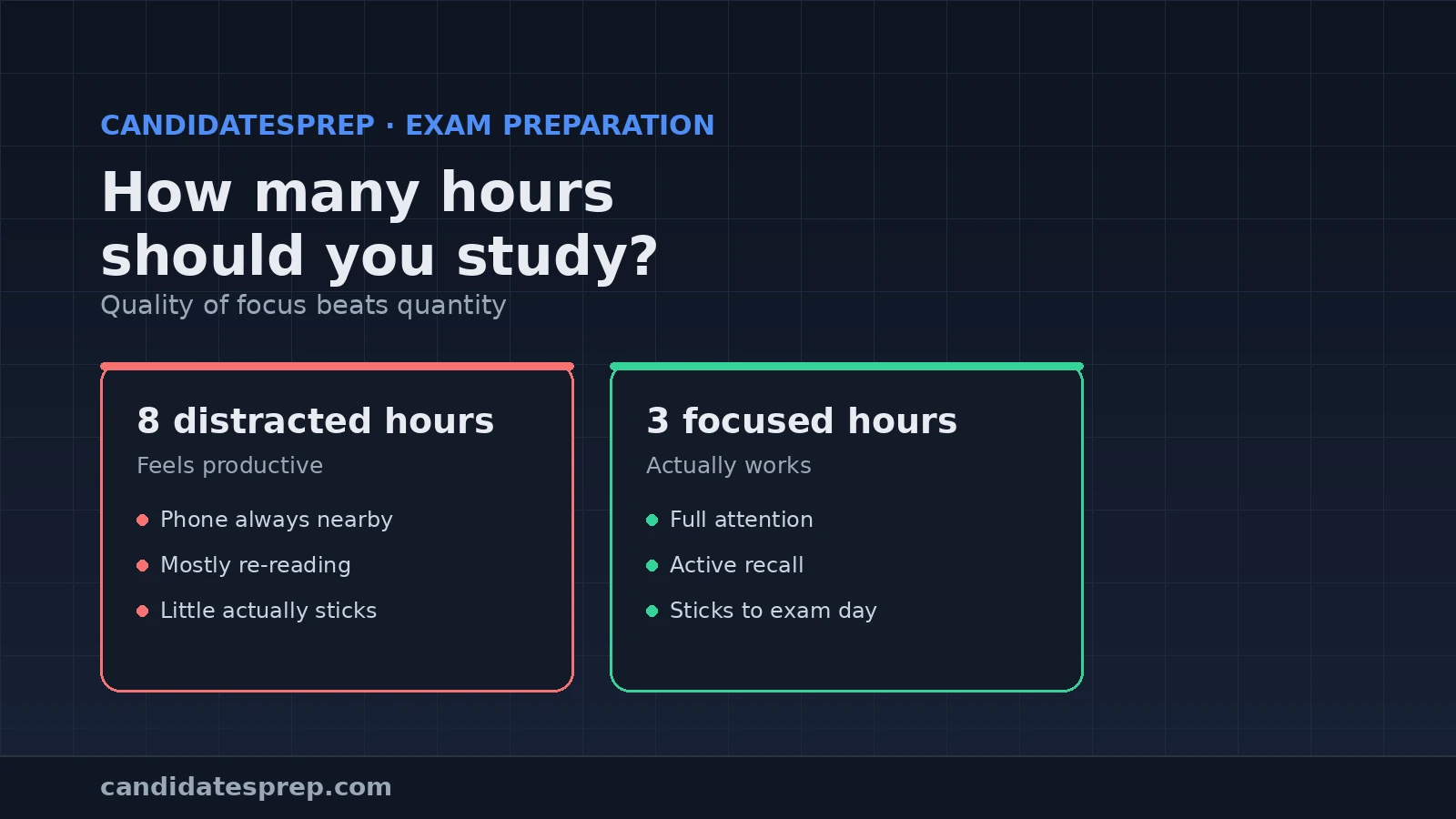
There is no single right number of study hours a day; the honest answer is that a few genuinely focused hours beat many distracted ones. Quality of attention matters far more than raw time on the clock. Rather than chasing someone else's number, work out what fits your life and your exam. Here is how.
Why the hours question is the wrong question
People crave a number because it feels like a plan, but eight hours of half-attention with a phone nearby can achieve less than three hours of focused, active study. Concentration is the real currency, and it is finite. So the useful target is not hours logged but focused, active work done, which is a very different thing.
Work backwards from the exam instead
A better approach is to estimate the total preparation your exam needs, then divide it across the weeks you have. Count your realistic weekly study slots, and you will see how many hours a day you actually need, rather than guessing. If the sum does not fit, you either start earlier or narrow your focus to the heaviest-weighted topics. Our study timetable guide shows how to lay this out.
Respect the limits of focus
Deep concentration is hard to sustain for long. Most people manage only a few hours of genuinely focused study a day before quality falls off, especially around other commitments. That is normal, not a failing. Two or three strong focused hours, most days, sustained over weeks, outperform occasional marathon days that leave you drained and behind.
Make the hours active, not passive
An hour of testing yourself is worth several hours of re-reading. Whatever number of hours you settle on, fill most of them with active recall and practice questions rather than highlighting notes. This is why the hour count matters less than people think: the method inside the hour decides how much sticks.
Factor in rest and sleep
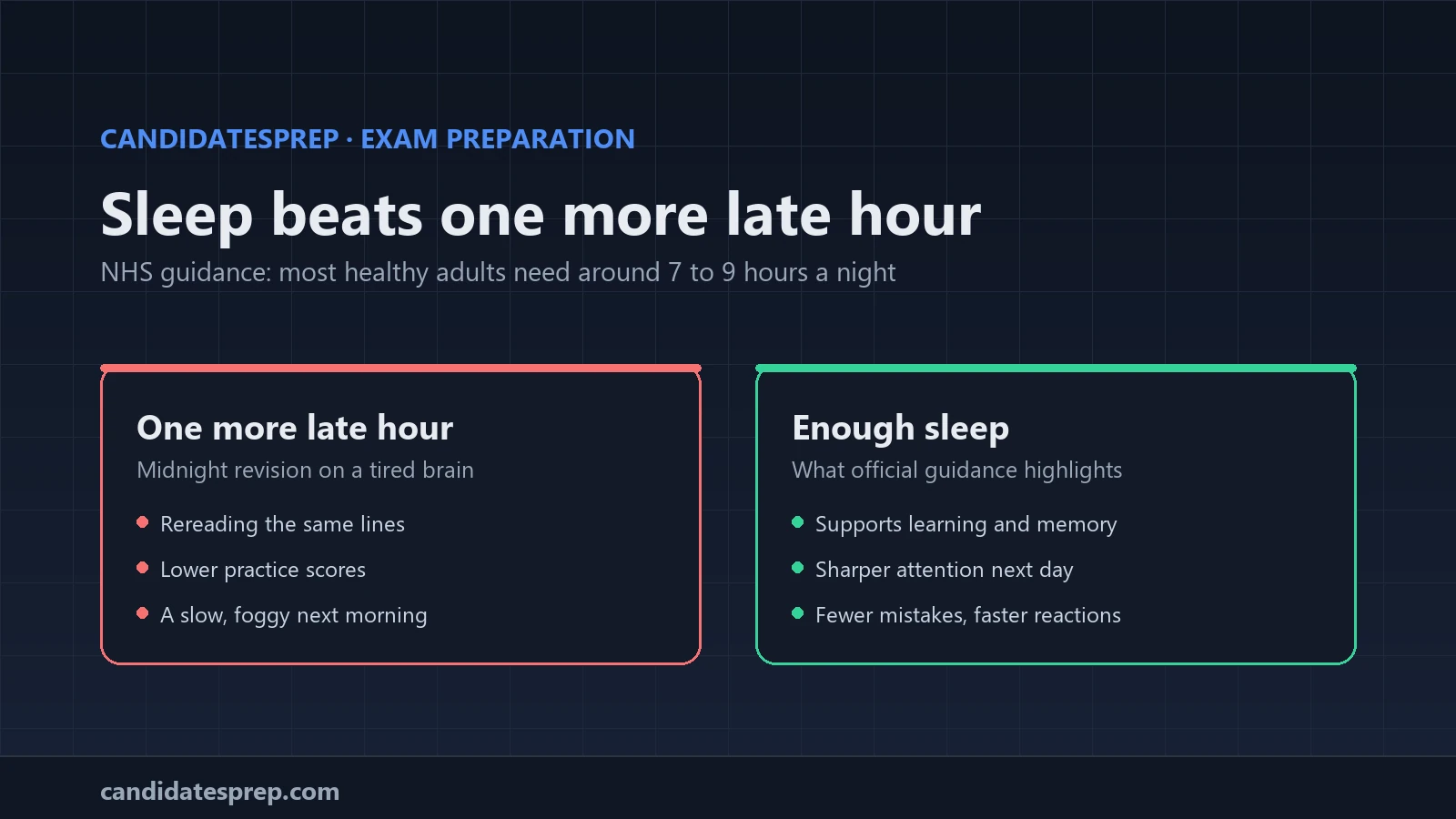
More hours are not automatically better, because a tired brain learns and recalls poorly. Protect your sleep, take real breaks, and do not trade rest for one more bleary hour the night before. Sustainable study beats heroic cramming, and rest is part of the work, not a reward for finishing it.
A sensible rule of thumb
If you want a starting point, aim for a realistic daily amount you can actually sustain, often somewhere around one to four focused hours depending on your schedule and how close the exam is, and raise it gently as exam day approaches. Then judge yourself on focus and progress, not on hitting an arbitrary number.
Practise under real exam conditions
Timed mocks tell you whether your hours are working far better than a study log does. CandidatesPrep scores by domain, so you can see whether the time you are putting in is translating into readiness, and where to redirect it. Trainers can track whether a cohort's effort is converting into passes.
The bottom line
Stop asking how many hours and start asking how focused and how active those hours are. Work backwards from the exam, protect a sustainable daily amount, make the time count, and rest properly. Quality, sustained over weeks, is what gets you through.
See if your hours are paying off: sit a timed mock on the CandidatesPrep simulator, or book a demo to track a cohort's progress.