Failing an exam feels awful, but it is a setback, not a verdict on your worth or your potential. Most people who go on to pass have failed something along the way. The difference is what you do next. Here is how to process the result, learn from it, and give yourself a strong shot at passing the retake.
Let yourself feel it, briefly
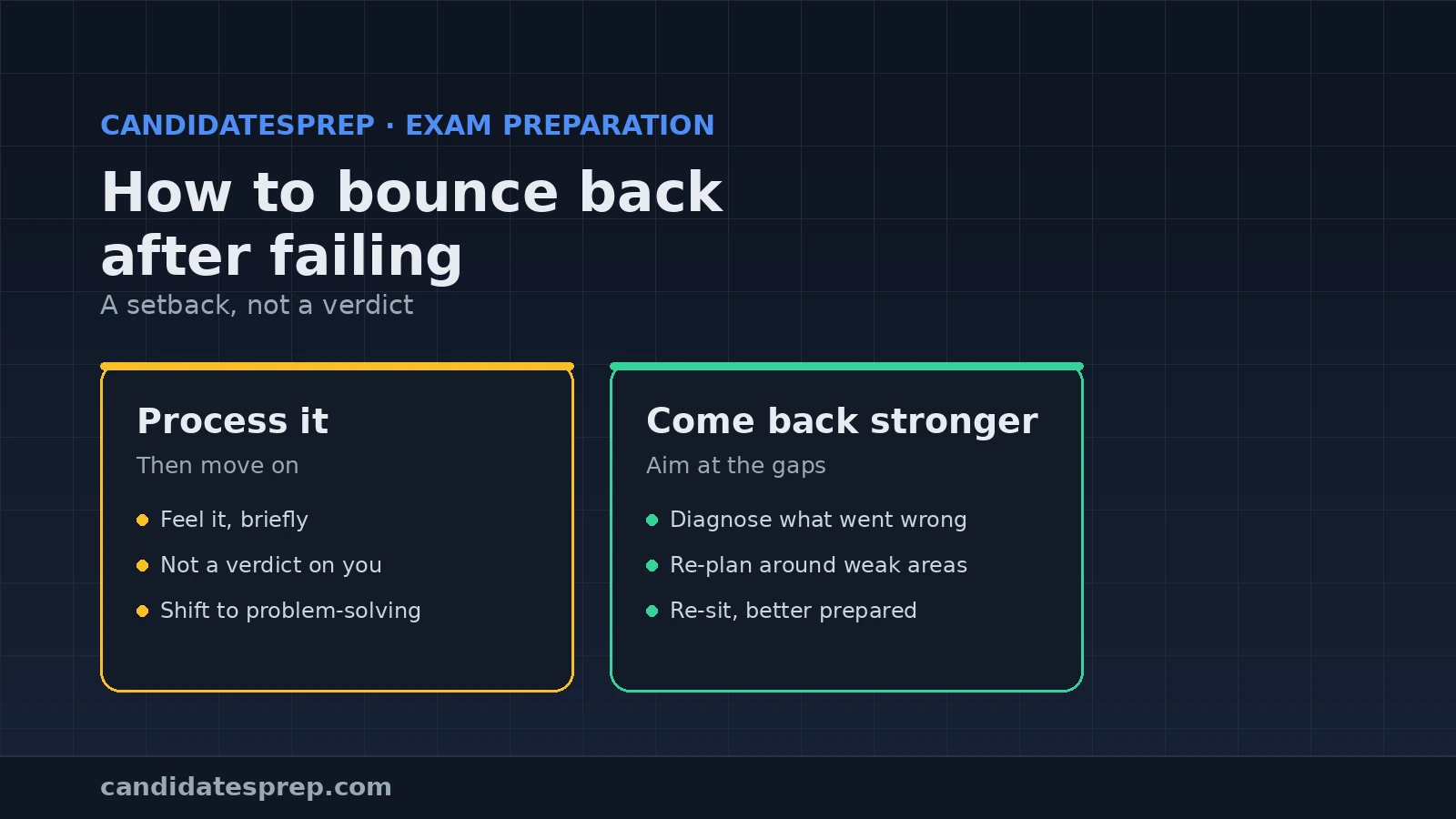
It is fine to be disappointed; pretending otherwise helps no one. Give yourself a short while to feel the frustration, then draw a line and shift into problem-solving mode. The goal is to move through the feeling rather than get stuck in it, because dwelling turns one failed exam into a dented belief in yourself that you do not deserve.
Separate the result from your identity
A failed exam means a particular attempt, on a particular day, did not clear a particular bar. It does not mean you are incapable or not cut out for this. That reframing matters, because harsh self-talk drains the motivation you need for the retake. Be as fair to yourself as you would be to a friend in the same position.
Diagnose what actually went wrong
Once the sting fades, get specific and honest. Was it a knowledge gap in certain topics, poor time management in the exam, nerves on the day, or simply not enough realistic practice? Many results reports break your performance down by area; use that evidence. A clear, specific diagnosis is what turns a failure into a plan.
Rebuild the plan around the gaps
Do not just repeat the same preparation and hope. Aim your next round at the weaknesses you found, giving the most time to the areas that let you down. Build a fresh study timetable backwards from the new exam date, and lean on active recall and timed practice rather than passive re-reading.
Fix the exam-day factors too
Sometimes the knowledge was there but the performance was not: running out of time, panicking, or misreading questions. If that was you, the fix is rehearsal under realistic conditions, not more content. Practising the full experience, to a clock, is what turns shaky performance into a steady one.
Treat the retake as information, not a referendum
You now know the format, the pressure and your own weak spots far better than a first-timer. That is a real advantage. Walk into the retake as someone who has scouted the ground, not as someone bracing for another judgement. And if nerves are a big part of the story, our guide to managing exam stress can help.
Practise under real exam conditions
The surest way to convert a fail into a pass is realistic, repeated rehearsal. CandidatesPrep gives you timed mocks scored by domain, so you can target the exact areas that let you down and watch them improve before the retake. Trainers can support resitting candidates with focused, shared practice.
The bottom line
Feel it, then diagnose it, then plan around it. A failed exam is a detour, not a dead end, and you are better placed to pass than you feel right now. Use what the result told you, and go again.
Turn the retake into your exam: sit targeted timed mocks on the CandidatesPrep simulator, or book a demo to support resitting candidates.