As automation and AI take on more routine technical work, the human skills employers once dismissed as "soft", communication, teamwork, adaptability and judgement, are increasingly the ones that decide who gets hired and who gets ahead. The label undersells them; these are hard to build, hard to automate, and business-critical. Here is why they matter more than ever and how to show you have them.
The term "soft" is misleading
Calling these skills soft makes them sound optional or easy, when they are neither. They are difficult to learn, developed over years of real interaction, and often the deciding factor in whether projects succeed. Many people would rather debug code than navigate a tense team disagreement well. Reframing them as core professional skills is closer to the truth.
Why they are rising in value
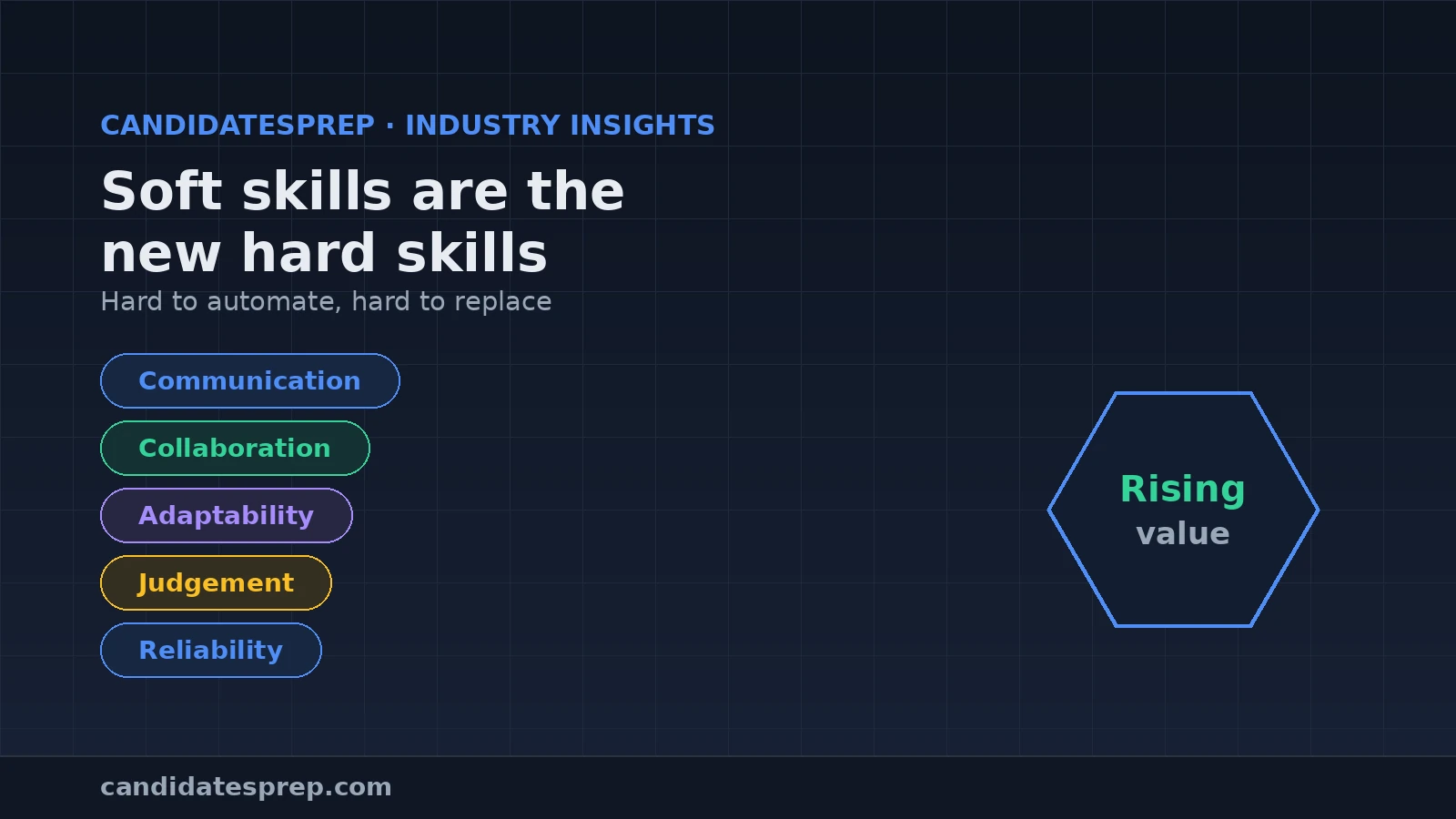
As tools get better at technical tasks, raw technical ability becomes less of a differentiator on its own, because more people and machines can do it. What remains scarce is the ability to communicate clearly, work with others, adapt to change and exercise good judgement. Our piece on the skills that stay valuable as AI advances makes the same point from the other direction.
The skills employers actually prize
- Communication: explaining ideas clearly and listening well.
- Collaboration: working effectively across a team and handling disagreement.
- Adaptability: learning quickly and staying steady through change.
- Judgement and problem-solving: framing messy problems and deciding well under uncertainty.
- Reliability: following through, owning mistakes, and being someone others can count on.
Hard skills still matter
None of this means technical skills are obsolete. You still need genuine competence, and certifications remain a strong way to prove it. The point is that technical skill is increasingly the entry ticket rather than the thing that sets you apart. The strongest candidates pair proven hard skills with the human skills that make those abilities count in a team.
How to build and show them
You build these skills through practice and feedback, not by reading about them. Seek roles and projects that stretch your communication and teamwork, ask for honest feedback, and reflect on how you handled difficult moments. To show them in interviews, tell specific stories: a time you resolved a conflict, adapted to a sudden change, or explained something complex simply. Evidence beats adjectives.
Where exams and certifications fit
Certifications prove the hard skills that get you shortlisted, and many professional exams increasingly test judgement and applied reasoning rather than pure recall. Preparing for those builds the thinking that underpins good professional judgement. Think of a certification as the credential and your human skills as what turns it into a career.
The bottom line
The skills we call soft are really core skills, and they are rising in value as technical tasks get automated. Build them deliberately, pair them with proven hard skills, and show them with concrete stories. That combination is what makes a candidate hard to replace.
Prove the hard skills that open the door: sit a timed mock on the CandidatesPrep simulator, or book a demo to develop a whole team.