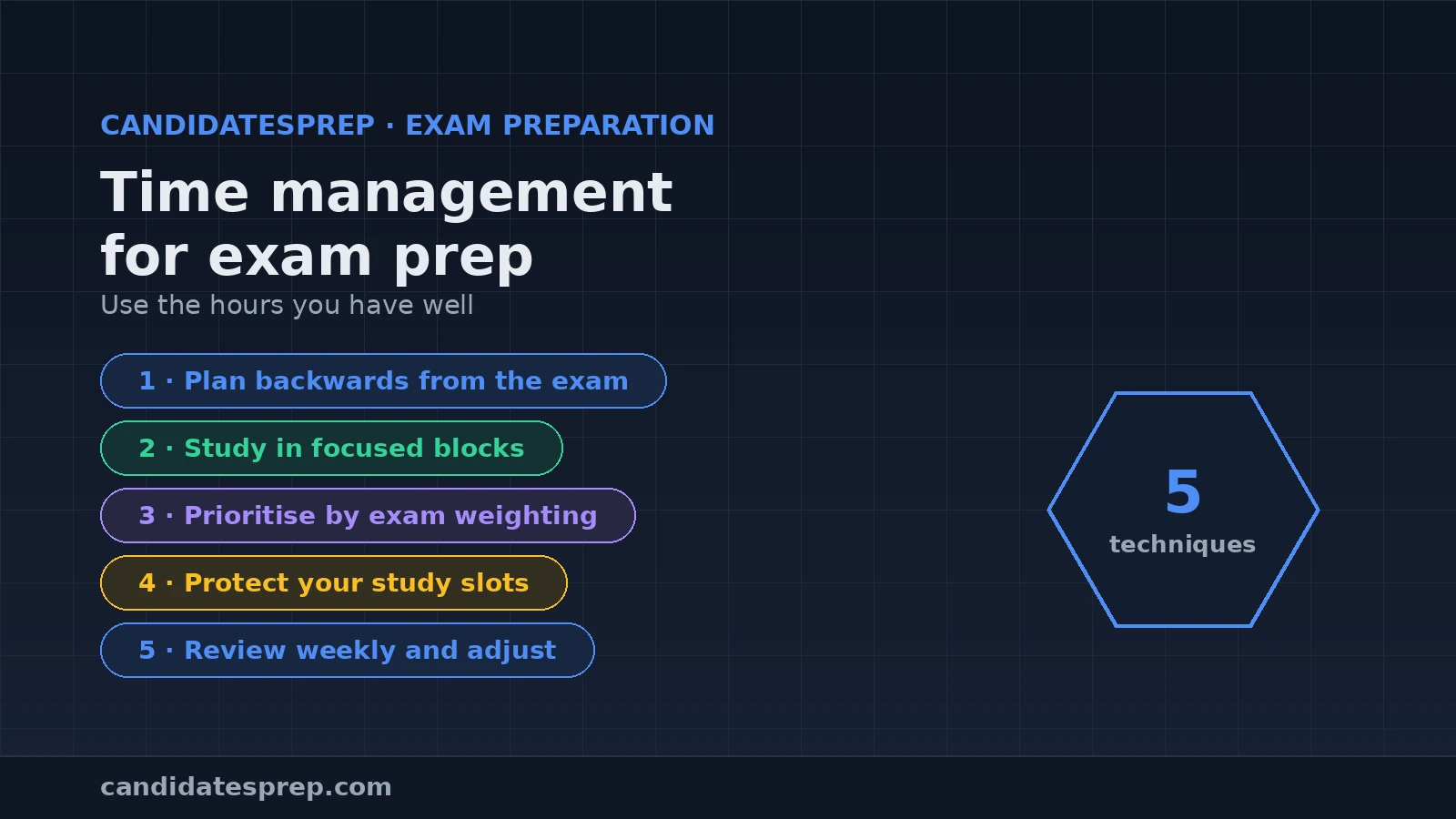
The best time management for exam preparation is not about squeezing out more hours; it is about making the hours you already have count. Most candidates are busy people fitting study around work and life, so the winning move is using limited time deliberately. Here are five techniques that genuinely help.
1. Plan backwards from the exam
Start from your exam date and work back, not from today and hope. Reserve the final week or two for review and mocks, then share the remaining weeks across your topics. This turns a vague intention to study into a concrete map, and it stops whole topics being discovered in the final week. Our guide to building a study timetable walks through the whole process.
2. Study in focused blocks
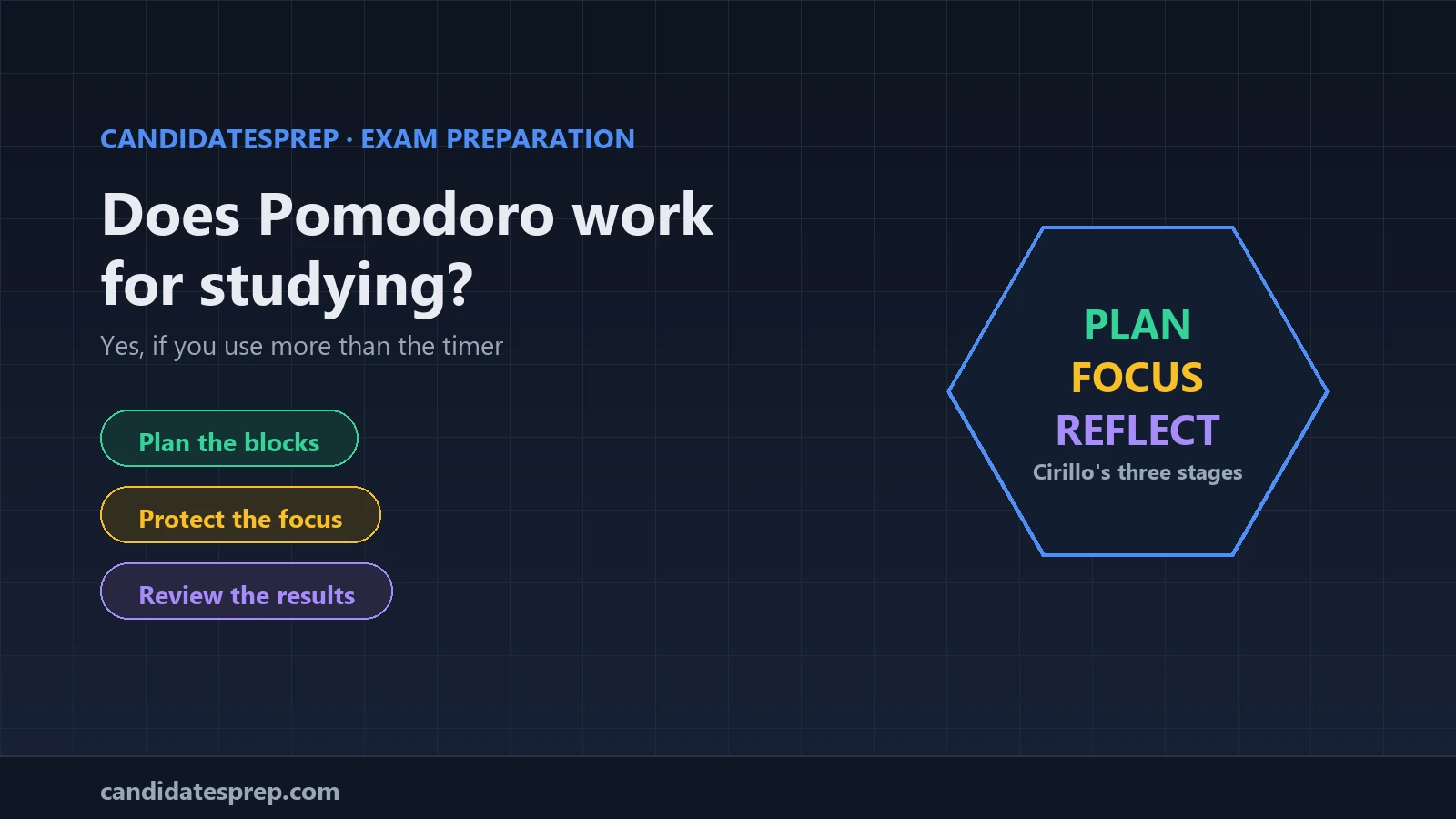
Long, unbroken study sessions feel virtuous but fade fast as attention drops. Work in focused blocks of roughly 25 to 50 minutes with short breaks between them. You will concentrate harder knowing a break is coming, and the breaks themselves help the material settle. Protect those blocks from your phone and notifications, which quietly shred your focus.
3. Prioritise by exam weighting
Not all topics deserve equal time. If your exam publishes domain weightings, study in proportion to them, giving the heaviest-weighted and your weakest areas the most attention. An hour spent on a 28 percent domain you find hard is worth far more than another hour polishing a small topic you already know. Spend your limited time where it changes your score.
4. Protect your study slots
Decide in advance when you will study, and treat those slots as real appointments rather than something to do if time is left over. Time that is not protected gets eaten by everything else. Build around your actual week, an hour before work, a lunch break, two evenings, so the plan survives contact with real life.
5. Review weekly and adjust
Every week, look at how your preparation is actually going and shift time towards your weak spots. Use your mock scores as evidence rather than your feelings. A plan is a living thing; the candidates who adjust based on results consistently beat those who grind through a fixed schedule that stopped fitting weeks ago.
Practise under real exam conditions
Time management inside the exam matters as much as in your preparation. Full, timed mocks rehearse your pacing, so you learn to budget minutes across questions and not get stranded. CandidatesPrep gives you timed, domain-scored mocks that double as practice and a revision list. Trainers can set a shared schedule and track a cohort against exam day.
The bottom line
You probably have enough time; the trick is spending it well. Plan backwards, work in focused blocks, prioritise by weighting, protect your slots, and review weekly. Do those five things and your preparation gets sharper without adding a single hour.
Ready to put your hours to work? Sit a timed mock on the CandidatesPrep simulator, or book a demo to plan a cohort's preparation.