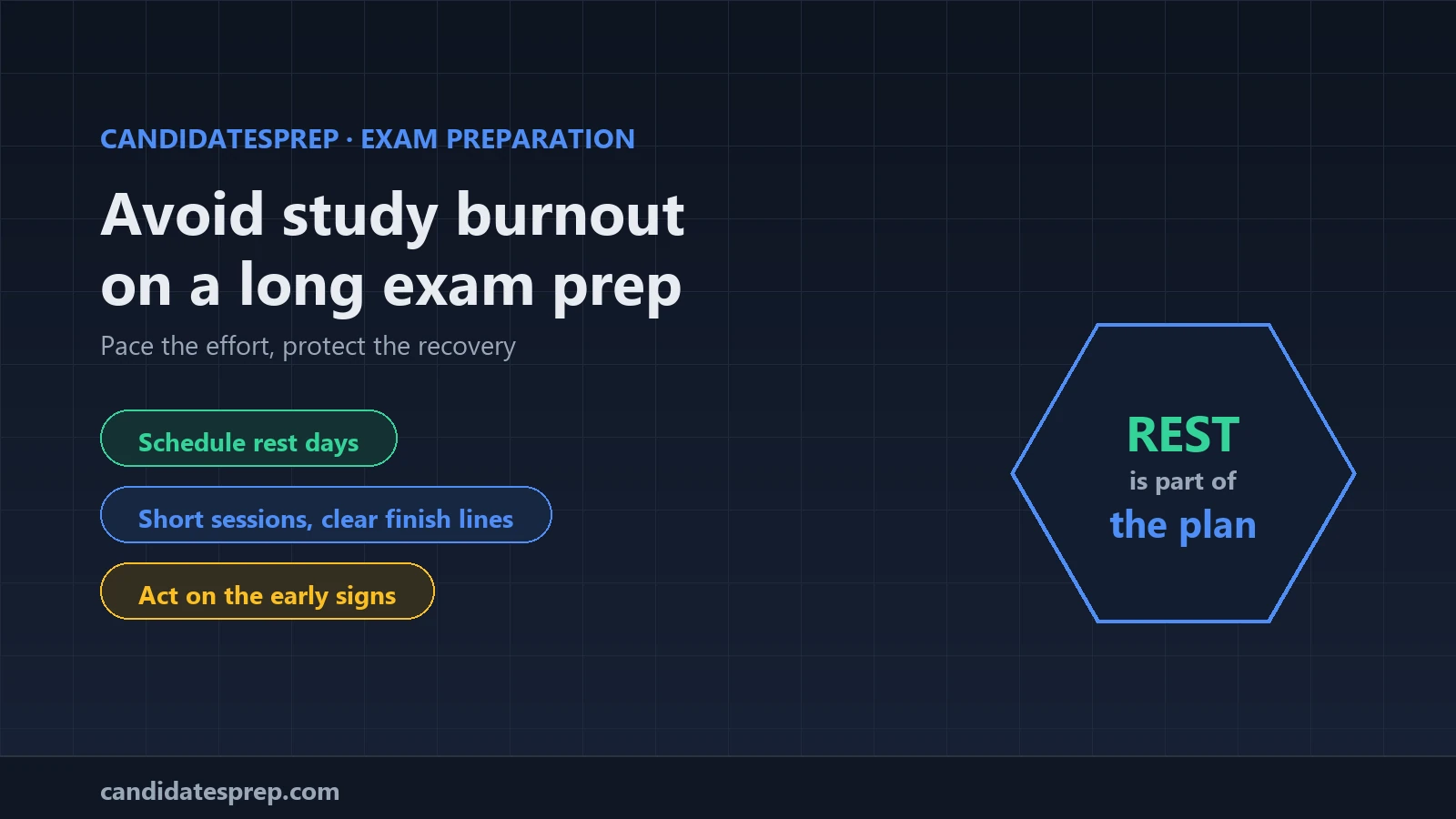
Study burnout is what happens when months of effort outrun your recovery: you feel drained, you start to dread the material, and your practice scores stall even as the hours go up. You avoid it by planning rest as deliberately as study, keeping sessions short with clear finish lines, and acting on the early warning signs.
What burnout looks like
The World Health Organization describes burn-out as a work-related syndrome with three features: exhaustion, growing mental distance or cynicism about your job, and reduced effectiveness. WHO is clear that its definition applies to the workplace and not to other areas of life, so "study burnout" is an everyday term rather than a diagnosis. Even so, the pattern will feel familiar to anyone on a long exam prep:
- You feel tired before a session starts, not just after it.
- You dread opening the material, or feel cynical about the whole qualification.
- You put in more hours, but your scores do not move.
If you are studying alongside a full-time job, the two pressures add up, which is why working professionals are especially exposed. You can read WHO's own description in its note on burn-out in ICD-11.
More hours is not the answer
When progress slows, the instinct is to study longer. Past a point, extra hours on a tired brain buy very little: you reread the same page, recall less, and make careless mistakes in practice. A stalled score after a heavy week is often a signal to rest, not to push harder. Our guide to how many hours to study covers how to size your plan realistically in the first place.
Plan recovery like you plan study
Rest works best when it is scheduled, not when it is whatever is left over. Build it into your plan from the start:
- At least one full day off each week, with no "quick review".
- A lighter week every so often on a long prep, especially after a big mock.
- Protected sleep on weeknights, because sleep helps lock in what you learned that day and a tired brain recalls less.
A study timetable that works includes these breaks from day one, rather than adding them once you are already worn out.
Give every session a finish line
Open-ended sessions drain you because they never feel finished. Decide before you start what the session is for, such as one topic reviewed and twenty practice questions answered, and stop when it is done. For working candidates, short, focused sessions on weekdays and one longer mock sitting at the weekend is far more sustainable than trying to study for hours every evening.
Vary the work
Doing the same thing for weeks wears you down faster. Mix the types of work: learning new material, active recall on topics you have already covered, full timed mocks, and reviewing your mistakes. Variety keeps you engaged, and each type of work does a different job.
Act on the early warning signs
Burnout builds gradually, so act on the first signs rather than waiting for a crash. If you notice that you are dreading every session, sleeping badly, getting irritable, or seeing flat scores for two or three weeks, try this:
- Take one or two full days off, deliberately and without guilt.
- Cut your plan back to the topics your results say matter most.
- Talk to someone: a friend, a colleague or your trainer.
If low mood or exhaustion carries on after rest, or starts to affect your daily life, speak to your GP or another health professional. Our guide to managing exam stress also covers where to find support.
Practice under real exam conditions
Much burnout comes from wasted effort: hours spent on topics you already know while weak areas stay weak. On CandidatesPrep, timed mocks mirror the real exam and your results break down by topic, so you can spend limited energy where it counts. Trainers can set up learning paths that unlock in order and track each candidate's readiness, which makes it easier to spot someone who is falling behind or running out of steam.
The bottom line
Burnout is not a sign that you are not cut out for the exam. It is a sign that your effort has outrun your recovery. Schedule rest, keep sessions short and purposeful, and let your results tell you where to spend your energy.
Pace yourself with a timed mock on the CandidatesPrep simulator, or book a demo to plan a cohort's preparation at a sustainable rhythm