A slow, steady breathing exercise and a quiet grounding routine are two of the simplest tools for everyday exam nerves, and they work best when you have practised them in advance. Here is the NHS exercise step by step, how to rehearse it, an exam-room version and the signs it is time to talk to a GP.
What these techniques can and cannot do
Before an exam, nerves often show up in the body first: a racing heart, tight chest, quick shallow breathing or a mind that goes blank. Breathing and grounding techniques help you notice those signals and settle them enough to think clearly. They are not a treatment for an anxiety disorder, and they do not replace preparation. Our guide to managing exam stress covers preparation, sleep and support; this post is about the techniques and how to make them stick.
The NHS calming breath, step by step
The NHS publishes a simple breathing exercise for stress. In summary:
- Get comfortable. Sit in a chair that supports your back with both feet flat on the floor, roughly hip-width apart, or lie down. Loosen anything tight around your chest or waist.
- Let your breath flow as deep into your belly as is comfortable, without forcing it.
- Breathe in through your nose and out through your mouth.
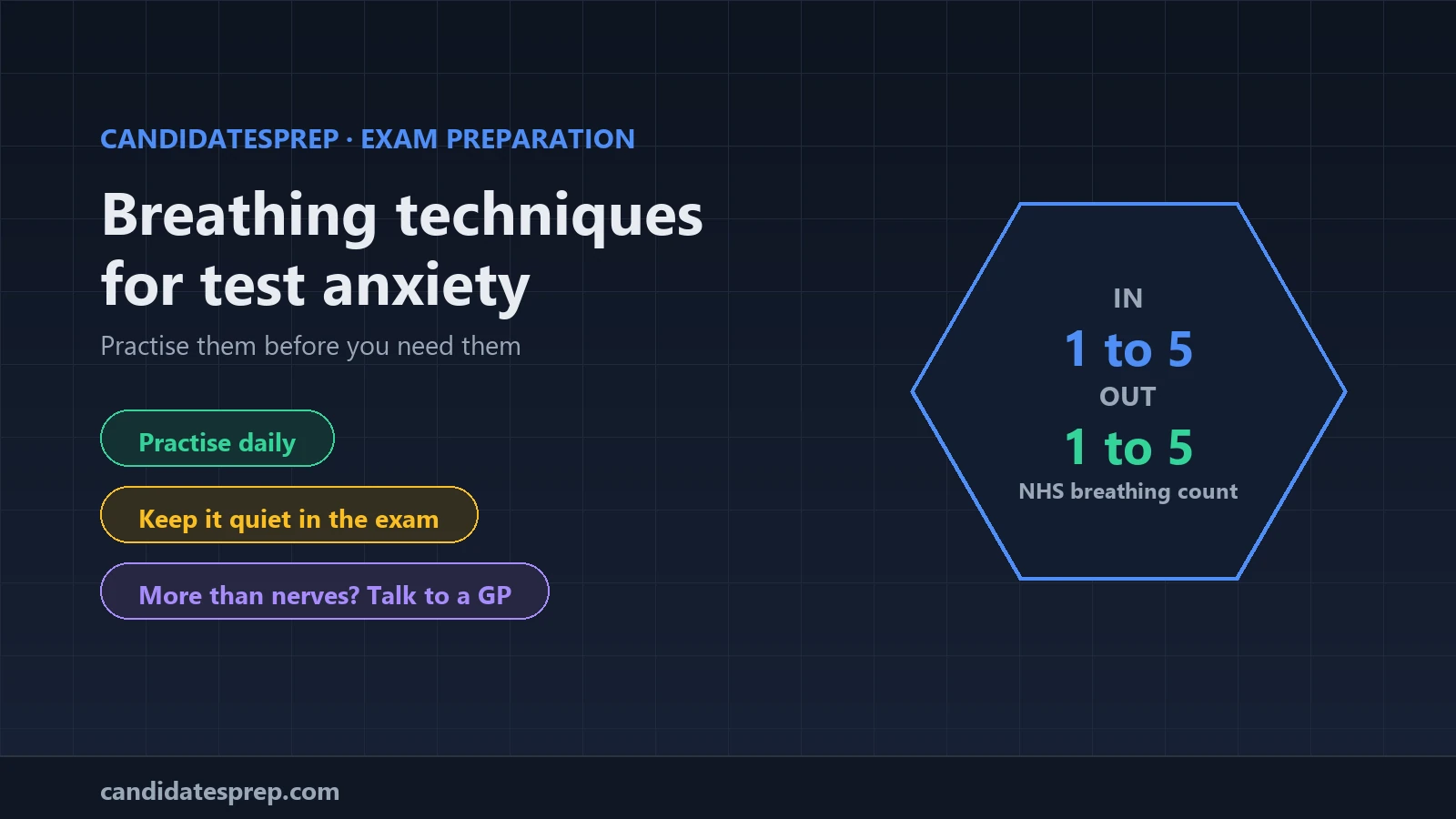
- Breathe in gently and regularly. Some people find it helps to count steadily from 1 to 5; you may not reach 5 at first.
- Let the breath flow out gently, counting from 1 to 5 again if that helps.
- Keep going for at least 5 minutes.
The NHS says you get the most benefit by doing it regularly, as part of your daily routine. Check the page for current details.
Practise it before you need it
A technique you have only read about rarely comes back to you under pressure. Make it familiar during your preparation:
- Do the full exercise once a day, for example before your first study session.
- Do a minute of steady breathing at your desk before every timed mock, then start. Over a few weeks, the routine becomes part of how you begin an exam.
- Rehearse a short version: three or four slow breaths at the same steady count whenever you notice tension during a mock.
It will not do what the full exercise does, but a familiar rhythm is a quick cue to slow down.
In the exam room, or on camera
Grounding brings your attention back to the present when your thoughts start racing. A widely used version is 5-4-3-2-1: noticing five things you can see, four you can feel, three you can hear, two you can smell and one you can taste. In a silent exam room, a shorter version is easier:
- Press your feet into the floor and notice the contact.
- Notice the chair supporting you and the pen or mouse in your hand.
- Find three things you can see on your desk or screen.
- Drop your shoulders and unclench your jaw and hands.
- Take a few slow breaths, then reread the question in front of you.
If your exam is proctored online, keep your routine compatible with the rules. Proctoring can flag things such as looking away from the screen, noise or talking, as our guide to what happens when you are flagged explains. So breathe quietly, never count aloud, keep your face in view of the camera and find your three things on the screen rather than around the room. For the rest of the morning routine, see our guide to exam-day nerves.
When nerves are more than nerves
Everyday nerves come and go around exams. It is time to talk to a professional if:
- anxiety is affecting your daily life, not only exam mornings. The NHS advises contacting NHS 111 or talking to a GP;
- you cannot tell whether shortness of breath is from anxiety, or other symptoms worry you, in which case the NHS says to see a GP;
- worry is stopping you from studying, sleeping or functioning for weeks at a time.
Outside the UK, speak to a doctor or your local health service. If you ever feel unable to cope or keep yourself safe, get urgent help straight away. And if a health condition affects how you sit exams, ask your exam provider early whether adjustments are available.
Practise under real exam conditions
The most reliable way to make a calming routine automatic is to use it in conditions that feel like the real thing. On CandidatesPrep you can sit timed mocks that mirror the real exam's timer, navigation and question flagging, and run your breathing routine before each one. By exam day, both the format and the routine feel familiar, and results broken down by topic show where to focus.
The bottom line
Breathing and grounding techniques are simple, but they work best when practised: learn the NHS calming breath, build a quiet routine for the exam room and use both in every mock. If anxiety goes beyond everyday nerves, talk to a GP or another health professional.
Rehearse your routine alongside a timed mock on the CandidatesPrep simulator, or book a demo to give a whole cohort regular practice in exam conditions.