Sometimes. Certifications are linked with higher pay in several large salary surveys, but the link tends to be strongest when employers require or value the credential and when it comes with real experience. A certificate on its own is rarely the whole story. Here is what the surveys show, where they fall short, and how to check your own market.
What the big salary surveys say
Three well-known surveys are worth knowing, each checked on the publisher's own page:
- PMI, Earning Power: Project Management Salary Survey, 14th edition (2025). Respondents with the PMP reported a 17% higher median salary than non-certified peers across 21 countries. In the US, certified respondents reported a median of $135,000 against $109,157 for those without, a gap PMI puts at nearly 24%. See the PMI salary survey.
- ISC2 Cybersecurity Workforce Study (2025). ISC2 publishes self-reported global median salaries for its certification holders, in US dollars: $127,000 for the CISSP and $95,200 for the SSCP, for example. See ISC2's salary figures.
- Skillsoft, IT Skills and Salary Report (2024). Among more than 5,100 tech professionals, the most common reason given for earning more was job performance; earning a new certification was one of several other reasons. Of those who had been job hunting, 67% said their technical certifications appealed to hiring managers. See Skillsoft's summary.
These figures are self-reported by people who chose to answer, and pay varies widely by country, so read them as signals rather than forecasts.
Why a pay gap is not a pay rise
A survey gap compares two groups of people; it does not show what the certificate itself did. Certified professionals often differ in other ways, above all experience. The PMP requires three years of project management experience with a bachelor's degree, or five with a secondary diploma. The CISSP requires five years of cumulative, full-time experience in at least two of its eight domains. A median for CISSP holders is therefore a median for experienced security professionals.
The same caution applies over time. PMI reports that US respondents certified for more than ten years had a median of $173,000, against $123,000 for those certified for under five years. Some of that gap is likely to reflect the extra years of work behind it. ISC2's published medians cover certification holders only, so they show what holders earn, not what they would earn without it.
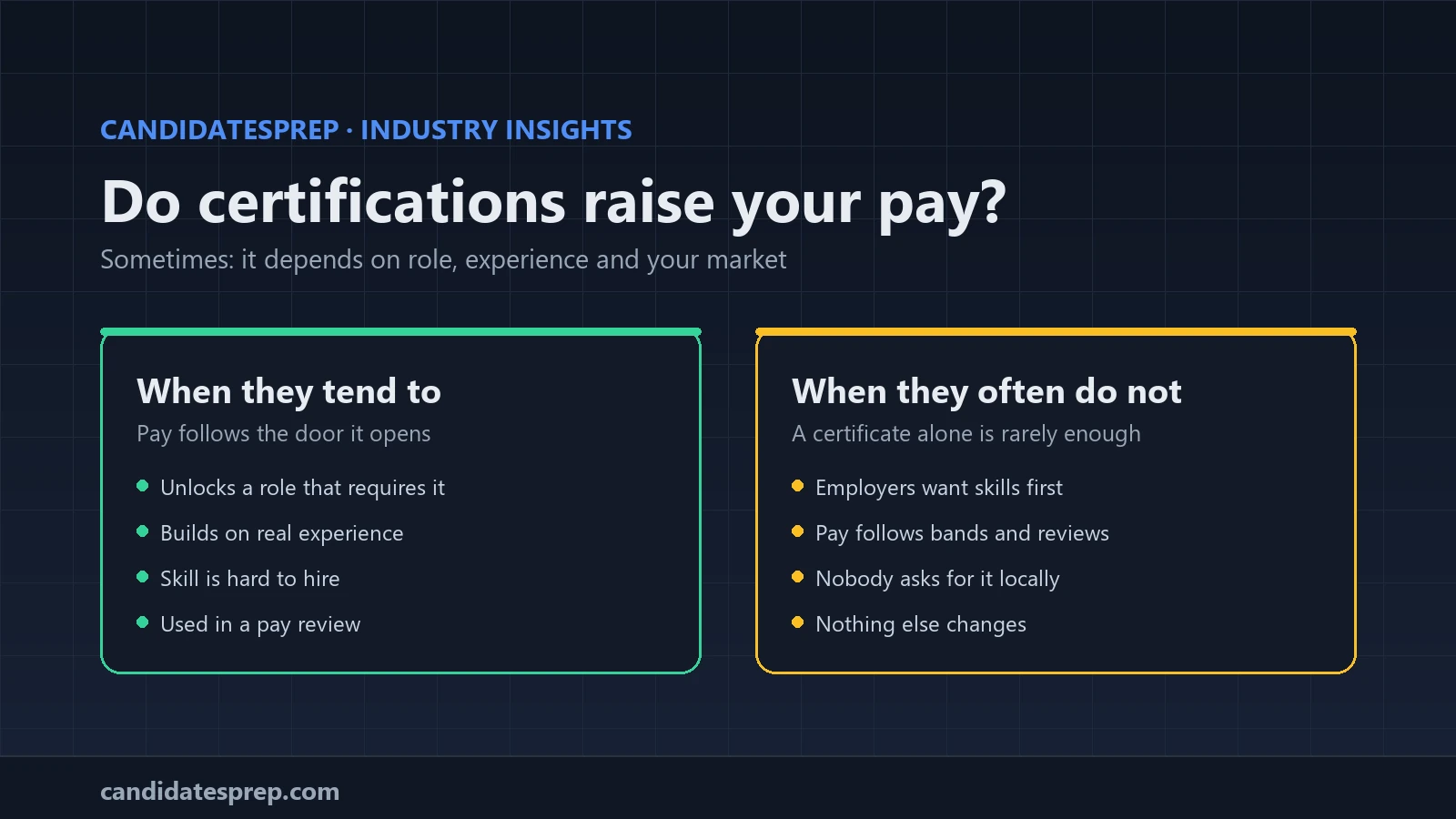
When a certification tends to raise pay
- It opens a role you could not reach before. Many pay jumps come from moving into a job, contract or regulated position that lists the certification as a requirement, rather than from a raise for the same work.
- It builds on experience. A certification that formalises skills you already use is easier to turn into a promotion than one that stands alone.
- The skill is hard to hire. Credentials in areas where employers struggle to recruit give you more bargaining power.
- You use it to negotiate. A new certification is a natural moment to ask for a pay review, ideally with local evidence of what certified roles pay. Skillsoft's respondents also named moving to a new employer as a route to earning more.
When it often does not
- Employers want skills first. In Skillsoft's survey, 75% of IT decision-makers said technical skills were the most desirable trait in a candidate, while 56% pointed to soft skills and 50% to certifications.
- Pay follows bands and reviews. In many organisations, passing an exam does not trigger a raise; the next review or promotion does.
- Nobody is asking for it. If job adverts in your field rarely mention the certification, it is unlikely to command a premium.
- Nothing else changes. If your role and results stay the same, the certificate alone gives your employer little reason to pay more.
Check pay in your own market
A global median in US dollars says little about pay in your city. Before you rely on any figure:
- Compare job adverts in your area that state a salary, with and without the certification in the requirements.
- Ask recruiters, and colleagues who hold it, what actually changed for them.
- Use issuer tools where they exist. PMI members can compare pay by country, role and experience with its interactive salary survey tool.
- Put your findings through the cost and payoff questions in our guide to whether certifications are worth it, and weigh them against other routes such as a degree.
Practise under real exam conditions
A certification can only affect your pay once you hold it, and a failed attempt adds cost and delay before any raise. On CandidatesPrep, timed mocks mirror the real exam's timer, navigation and flagging, and every result breaks down by topic, so you can see when you are ready rather than guessing. Employers paying for staff certifications can check per-candidate readiness across a cohort before booking exam seats.
The bottom line
Certifications are linked with higher pay in major surveys, but the link runs through roles, experience and demand, not the certificate alone. Treat survey figures as self-reported signals, check pay in your own market, and choose certifications that open a specific, better-paid door.
Preparing for a certification that matters to your pay? Sit a timed mock on the CandidatesPrep simulator, or book a demo to prepare a team.