In the US, civil engineers typically sit the NCEES FE exam (110 questions in 5 hours 20 minutes) and later the PE Civil exam (80 questions in 8 hours), both computer-based at Pearson test centres. Preparing candidates well means realistic long papers, numeric problem practice and fluency with the reference handbook. Here is how an LMS helps review courses and engineering firms deliver it.
What the exams look like
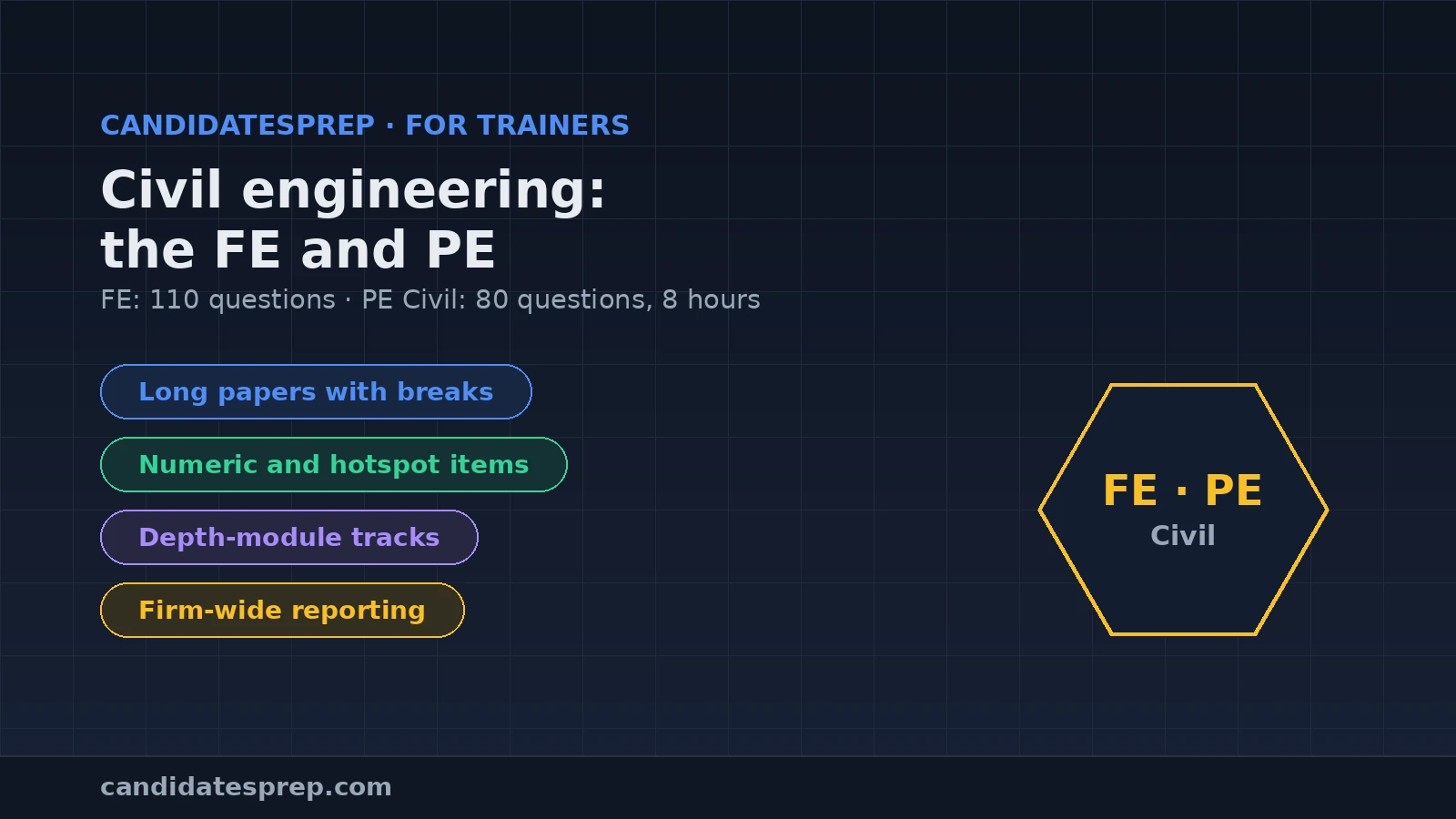
According to NCEES, the FE exam has 110 questions, with 5 hours 20 minutes of exam time inside a 6-hour appointment that includes a tutorial and a scheduled break. The PE Civil exam has 80 questions, including multiple-choice and alternative item types, with 8 hours of exam time inside a 9-hour appointment. PE Civil candidates choose a depth module: construction, geotechnical, structural, transportation, or water resources and environmental. The PE is not open book; NCEES supplies an electronic reference handbook and specified design standards, which are the only references allowed. Check NCEES for current specifications before building a course.
Why it is demanding to teach
- Length: an eight-hour exam tests endurance as much as knowledge.
- Calculation-heavy: many questions require working a problem through to a numerical result.
- Reference fluency: candidates who cannot find things quickly in the supplied handbook lose time on every question.
- Mixed cohorts: engineers on a review course usually work full time and sit different depth modules.
How a good LMS helps
- Long, realistic papers: CandidatesPrep's exam builder sets durations, breaks and pass marks, so you can rehearse a full FE or PE sitting, not just topic quizzes.
- Varied item types: numeric, multi-select, matching, ordering and hotspot questions help reflect alternative item types alongside standard multiple choice.
- Depth-module tracks: tag questions by topic and depth module, and organise separate courses or learning paths, so a geotechnical candidate practises what they will actually sit.
- Topic results and item analysis: every result breaks down by topic, and item analysis shows which questions are causing trouble.
- Randomised papers: each candidate gets a randomised paper, which keeps repeated mocks honest.
- Firm-wide visibility: for employers sponsoring engineers, exportable reports show who is progressing towards licensure.
Train with the handbook, every time
Make the electronic reference handbook part of every practice session. Encourage candidates to solve mock questions with the same handbook they will use on the day, so locating formulae becomes automatic. Speed with the reference is one of the most trainable advantages in these exams.
Pace the programme for working engineers
Working engineers need short, regular sessions during the week and longer mock sittings at weekends. Learning paths that unlock in order keep busy candidates on track, and spacing full mocks across the course builds the stamina these long exams demand. Our guide to avoiding burnout on a long study plan is worth sharing with candidates.
The bottom line
FE and PE preparation tests breadth, calculation and endurance. An LMS that runs realistic long papers, supports varied item types, separates depth modules and shows topic-level progress makes it far easier to bring engineers to licensure.
See our government and licensing solutions, try the CandidatesPrep simulator, or book a demo.